
Did you know that businesses optimizing their funnel in sales are projected to see up to 60% revenue growth by 2025? In a digital world where every lead counts, staying ahead means refining your sales process with precision and confidence.
This guide is your roadmap to mastering the funnel in sales for 2025. You’ll discover the fundamentals, explore a step-by-step process, uncover the latest technology trends like AI, and gain actionable strategies for both B2B and B2C success.
Ready to take control of your sales outcomes? Dive in and unlock the full potential of your sales funnel this year.
Understanding the Sales Funnel: Foundations for 2025
Sales success in 2025 relies on mastering the funnel in sales, a strategy that serves as the backbone of modern customer journeys. As buying behaviors shift and digital transformation accelerates, understanding how to guide prospects from awareness to loyalty is essential for any business aiming to outperform the competition.
Defining the Sales Funnel in Modern Sales
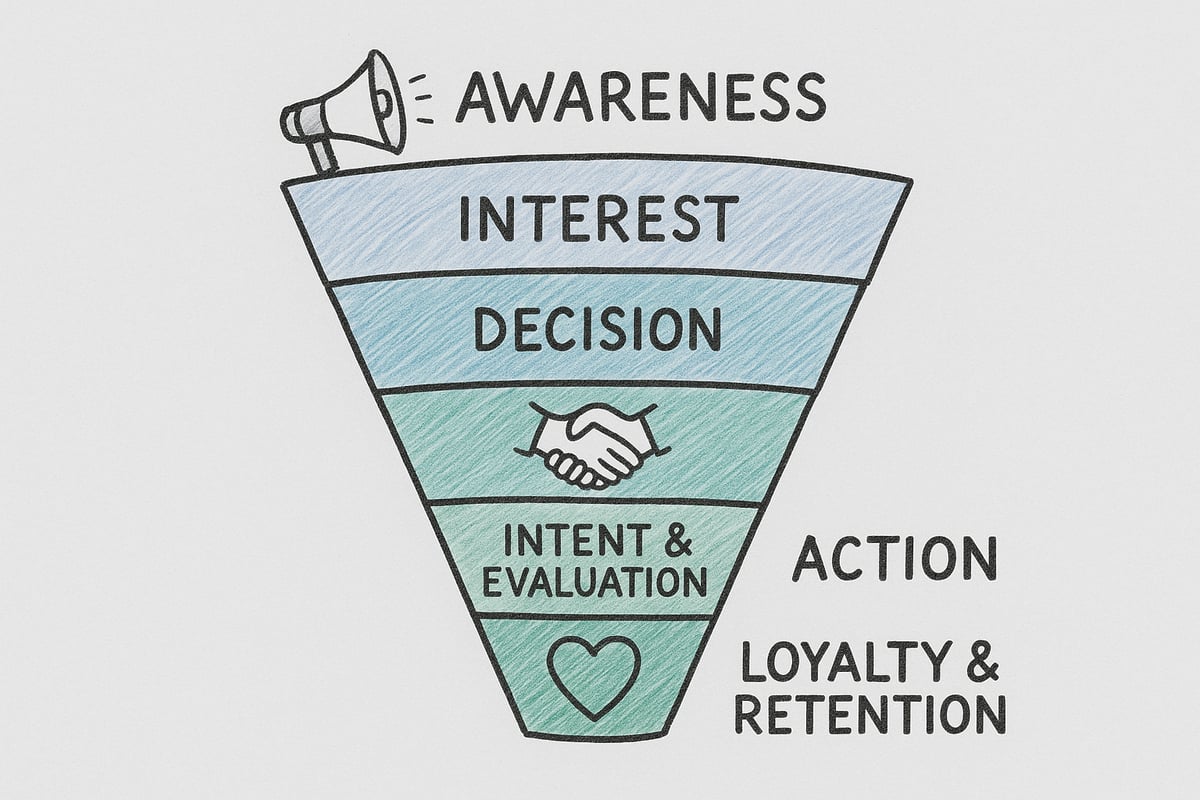
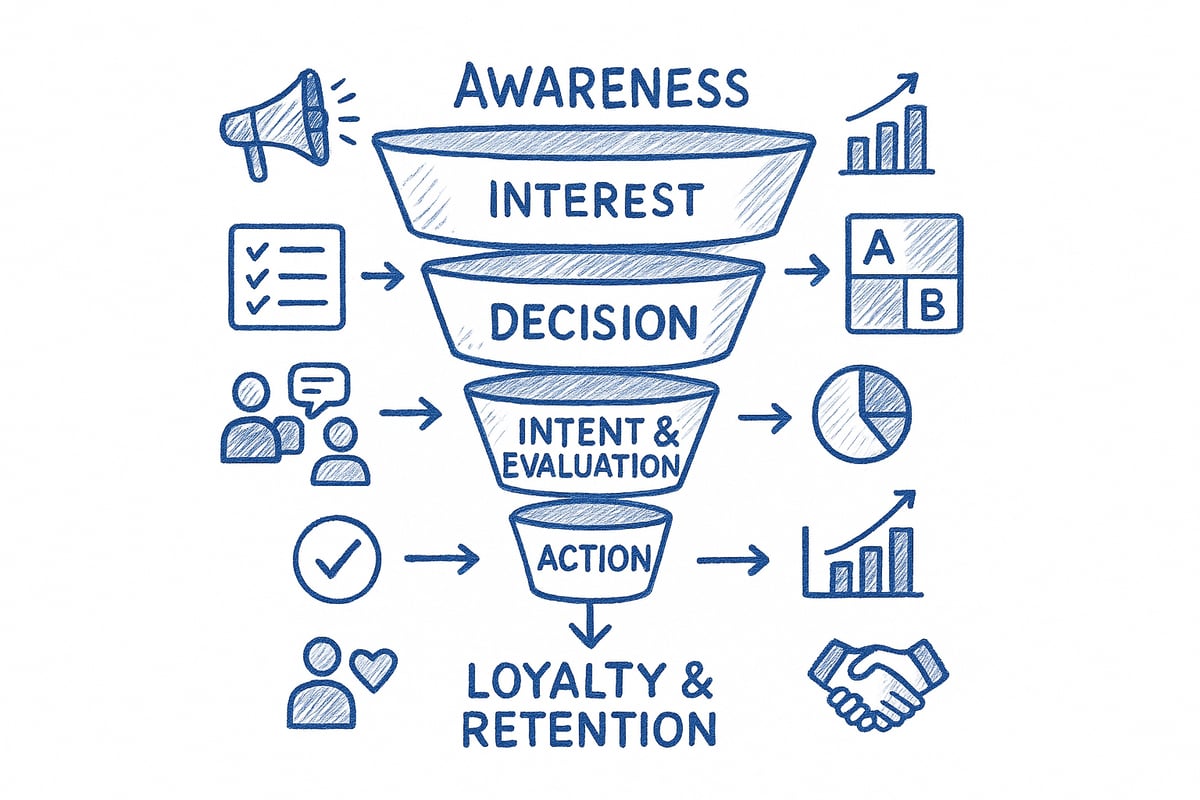
A funnel in sales is a visual representation of the stages a prospect moves through on their way to becoming a loyal customer. It maps the entire buying journey, starting from the first interaction to post-purchase engagement. While often confused with marketing funnels, the sales funnel focuses specifically on conversion activities, whereas marketing funnels drive initial awareness and interest.
Digital transformation has reshaped the funnel in sales. Today’s buyers expect personalized experiences and seamless transitions between stages. Companies are increasingly adopting customer-centric strategies, blending sales and marketing efforts to remove friction and ensure prospects feel understood at every touchpoint.
Industry leaders like IBM and Salesforce recognize six core stages in the modern sales funnel:
| Stage | Purpose |
|---|---|
| Awareness | Attract potential leads |
| Interest | Engage and educate prospects |
| Decision | Build trust and address objections |
| Intent & Evaluation | Nurture high-intent leads |
| Action | Convert leads into customers |
| Loyalty & Retention | Maximize lifetime value and advocacy |
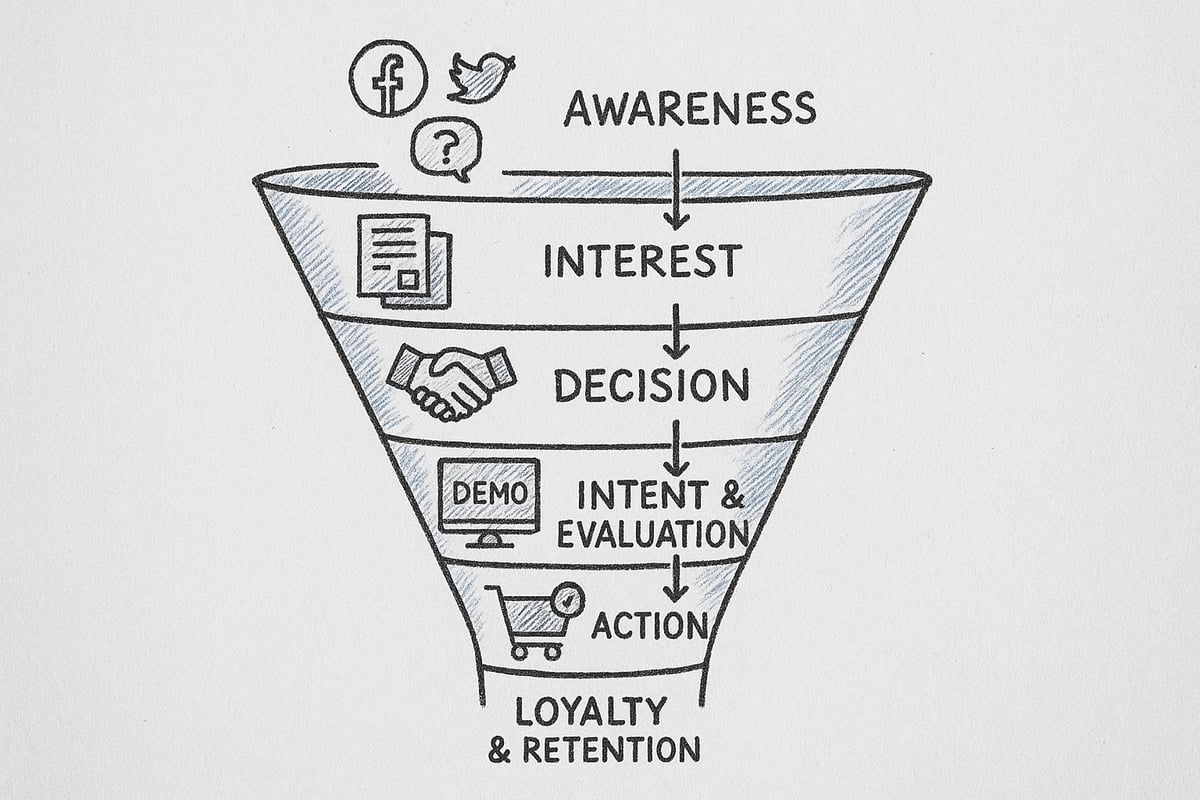
For example, a prospect might first see an ad (Awareness), download a whitepaper (Interest), compare your solution to others (Decision), request a demo (Intent & Evaluation), make a purchase (Action), and later become a brand advocate (Loyalty & Retention). According to IBM, businesses using a structured funnel in sales report up to 50% higher conversion rates.
To see how these stages work in practice, explore this complete sales funnel breakdown.
Seamless alignment between sales and marketing teams is critical. When both teams share goals and data, prospects progress smoothly through the funnel in sales, resulting in better outcomes and higher efficiency.
Why Sales Funnels Matter: Benefits and Business Impact
A well-designed funnel in sales delivers measurable advantages at every stage. First, it enables improved lead nurturing, ensuring prospects receive the right information at the right time. Second, enhanced targeting lets teams focus on the highest-potential leads, reducing wasted effort.
Data-driven insights are another major benefit. By tracking each stage of the funnel in sales, companies can identify bottlenecks, refine messaging, and optimize their pipeline. This approach streamlines the entire sales process, making it easier to scale.
Competitor analysis reveals that businesses with clearly defined funnels enjoy higher customer retention and increased referrals. For instance, SaaS providers who mapped out their funnel in sales reported more repeat purchases and stronger relationships.
Real-world examples abound. Companies that invested in funnel optimization saw long-term growth and established a sustainable competitive advantage. The funnel in sales is not just a tool, it is a proven path to higher revenue, lasting loyalty, and market leadership.
Step-by-Step: The Sales Funnel Process Explained
Mastering the funnel in sales starts with understanding each stage as a building block in your revenue engine. A well-structured funnel in sales not only guides prospects from first touch to loyal customer, but also reveals exactly where to optimize for higher conversions and lasting growth.
Stage 1: Awareness – Attracting Potential Leads
The journey through the funnel in sales begins with awareness. This stage is all about visibility—making sure your brand stands out where your ideal customers spend time.
Use tactics like targeted social ads, SEO-driven blog posts, and webinars to capture attention. Educational content and thought leadership also build credibility. For example, companies running awareness campaigns report a 30% increase in lead volume, according to Salesforce.
Key actions:
- Share valuable blog posts and guides
- Host free webinars or live demos
- Use compelling CTAs to drive engagement
At this stage, a strong value proposition makes all the difference in moving leads further into your funnel in sales.
Stage 2: Interest – Engaging and Educating Prospects
Once you’ve caught their eye, the next step in the funnel in sales is nurturing genuine interest. This is where you educate and qualify your audience.
Provide case studies, downloadable lead magnets, and interactive landing pages to showcase your expertise. Personalization is key—tailor your messaging and resources for different buyer personas.
Best practices include:
- Offering exclusive ebooks or guides
- Using quizzes to segment leads
- Sending personalized follow-up emails
By positioning your brand as an authority, you keep prospects engaged and eager to move deeper into the funnel in sales.
Stage 3: Decision – Building Trust and Overcoming Objections
At the decision stage, prospects are actively comparing solutions. Your goal is to help them see why your offering stands out in the funnel in sales.
Support this with detailed product comparisons, transparent pricing, and real customer testimonials. The sales team plays a crucial role here—addressing objections directly and providing tailored advice.
Effective tactics:
- Live Q&A sessions to address concerns
- Sharing video testimonials or case studies
- Offering side-by-side feature comparisons
Trust-building content and responsive sales support help convert consideration into action within your funnel in sales.
Stage 4: Intent & Evaluation – Moving Prospects Toward Purchase
Here, prospects are signaling strong purchase intent. Recognizing these signals is crucial for funnel in sales success—look for demo requests, pricing inquiries, or free trial signups.
To nurture high-intent leads:
- Offer ROI calculators or product demos
- Provide tailored proposals based on prospect needs
- Use retargeting ads to keep your brand top-of-mind
The right mix of education and urgency helps propel leads from intent to decision, streamlining the funnel in sales and reducing friction.
Stage 5: Action – Converting Leads into Customers
This is the pivotal stage where leads become customers. The funnel in sales thrives when follow-ups are timely and the buying process is seamless.
Best practices involve:
- Quick, personal follow-up from sales reps
- Special incentives or limited-time offers
- Streamlined checkout and contract processes
A real-world example can be found in this Turning cold clicks into sales calls guide, where optimized follow-ups turned online interest into over 150 sales calls monthly.
Refining the action stage is essential for maximizing conversion rates and ensuring your funnel in sales delivers results.
Stage 6: Loyalty & Retention – Maximizing Customer Lifetime Value
The funnel in sales doesn’t end with a closed deal. Post-purchase engagement is vital for driving repeat business and referrals.
Key strategies include:
- Onboarding programs that set customers up for success
- Regular check-ins and proactive support
- Upsell and cross-sell offers tailored to customer needs
Statistics show retaining customers is five times cheaper than acquiring new ones. Advocacy programs and testimonials further amplify your brand, keeping the funnel in sales healthy and growing.
Leveraging Technology and AI in the Sales Funnel
Staying ahead in 2025 means harnessing the full power of technology within your funnel in sales. AI and automation are no longer futuristic concepts—they are the backbone of high-performance sales teams. By strategically deploying these tools, you can unlock efficiency, boost conversions, and gain insights that were once out of reach.
The Role of Automation and AI in Funnel Optimization
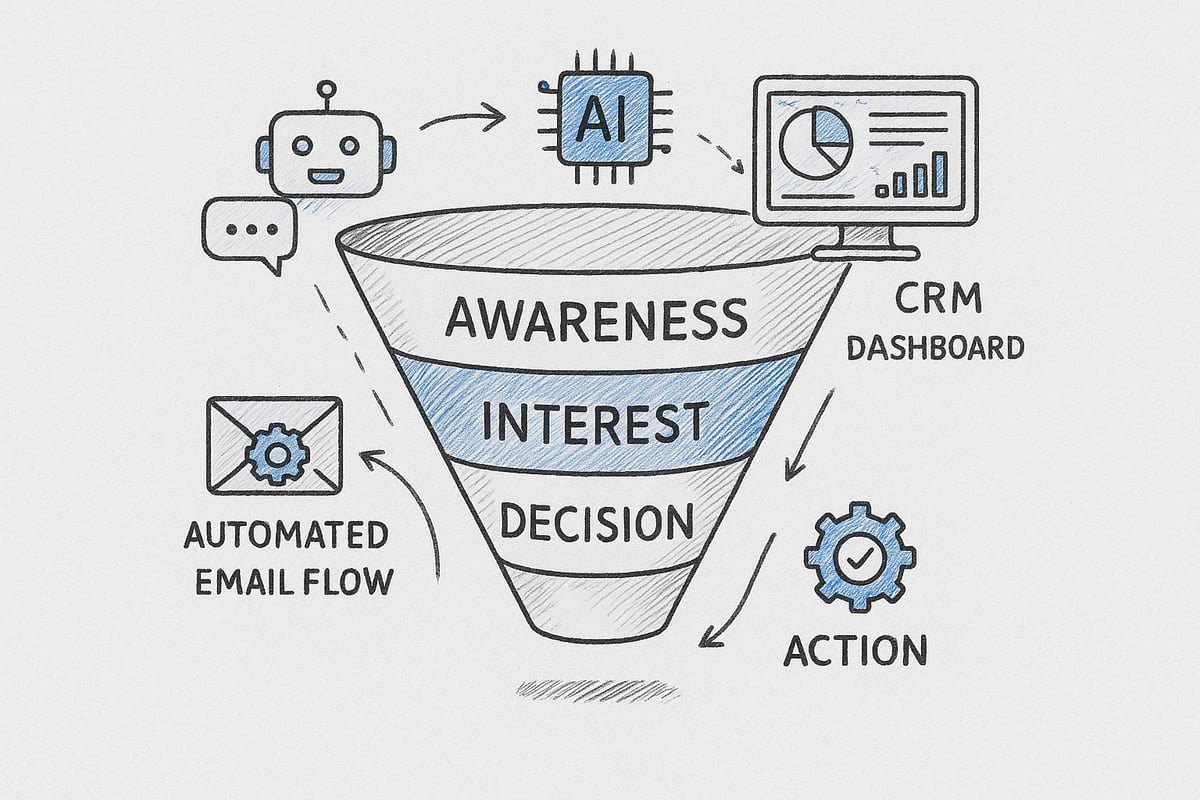
AI and automation are transforming every stage of the funnel in sales. Imagine a system where every lead is instantly qualified, nurtured, and tracked—without manual bottlenecks. That’s the new reality for sales teams using smart technology.
Here’s how automation and AI are making an impact:
- AI-driven Chatbots: Instantly engage website visitors, answer questions, and qualify leads 24/7.
- Predictive Analytics: Analyze customer data to forecast buying intent and recommend next steps.
- Automated Email Sequences: Deliver timely, personalized messages to nurture leads based on real behaviors.
- CRM Integration: Centralize all lead data, track funnel progress, and trigger automated follow-ups.
Consider this quick comparison:
| Tool/Feature | Funnel Stage Impacted | Benefit |
|---|---|---|
| AI Chatbots | Awareness, Interest | Immediate engagement, fast qualification |
| Predictive Analytics | Decision, Intent | Targeted offers, higher conversions |
| Automated Emails | Nurture, Retention | Personalized touchpoints, loyalty |
| CRM Systems | All | Unified data, seamless handoffs |
IBM reports that companies leveraging AI in their funnel in sales can better predict customer needs, leading to smarter targeting and higher conversion rates. Additionally, marketing automation platforms have proven to increase lead nurturing success, driving more prospects through the funnel to purchase.
What does this mean for your team? Less time spent on repetitive tasks and more time focused on building relationships and closing deals. For a deeper dive on how AI is transforming the funnel in sales, explore this AI-powered sales funnels resource.
Future Trends: The 2025 Sales Funnel Landscape
The landscape of the funnel in sales is set for rapid evolution. Generative AI will soon create hyper-personalized content and offers in real time, adapting instantly to each lead’s behavior. Advanced analytics will provide sales leaders with actionable insights, revealing exactly where prospects drop off and how to re-engage them.
Agentic AI—autonomous systems that handle complex tasks—is emerging as a game changer. These tools can manage entire segments of the funnel in sales, from automated outreach to intelligent follow-ups, freeing human reps to focus on high-value opportunities.
Customer expectations are also rising. Buyers now anticipate personalized interactions at every touchpoint. Companies that leverage AI for real-time personalization and predictive recommendations will stand out and convert more leads.
Forward-thinking businesses are already seeing results. By integrating advanced technology into their funnel in sales, they are increasing efficiency, shortening sales cycles, and driving sustainable growth. The message is clear: Embrace these trends now to stay ahead and master your funnel in sales for 2025.
Funnel Optimization Strategies: Metrics, KPIs, and Continuous Improvement
Optimizing your funnel in sales is the secret weapon for driving growth and outperforming competitors. By focusing on the right metrics and embracing a culture of continuous improvement, you can unlock more conversions, nurture loyal customers, and maximize your bottom line.
Measuring Funnel Performance: Key Metrics and Analytics
To master your funnel in sales, you need a laser focus on data. Tracking the right KPIs helps you spot opportunities and address weaknesses before they impact revenue. The foundation of funnel in sales optimization starts with measuring performance at every stage.
Here are the most critical metrics to monitor:
- Lead Generation Rate: Measures the number of new leads entering your funnel in sales.
- Conversion Rate: Tracks the percentage of leads that move from one stage to the next.
- Customer Acquisition Cost (CAC): Reveals how much you spend to acquire each customer.
- Retention Rate: Shows how well you keep customers engaged after purchase.
- Average Deal Size: Helps identify revenue potential and target segments.
- Sales Cycle Length: Indicates how quickly leads progress through your funnel in sales.
| KPI | What It Measures | Why It Matters |
|---|---|---|
| Lead Generation Rate | New leads entering the funnel | Gauges top-of-funnel health |
| Conversion Rate | % of leads advancing between stages | Reveals bottlenecks and strengths |
| CAC | Cost to acquire a customer | Informs budget and ROI |
| Retention Rate | % of customers retained | Predicts lifetime value |
| Sales Cycle Length | Days from lead to close | Highlights process efficiency |
Regularly reviewing these KPIs can uncover bottlenecks that slow down your funnel in sales. For instance, a low conversion rate from Interest to Decision could signal unclear messaging or lack of trust-building content.
Data-driven optimization is not just a best practice, it is a competitive necessity. According to AI’s Impact on Sales, sales teams leveraging advanced analytics see higher win rates and improved forecast accuracy. This empowers you to make smarter decisions and stay ahead of shifting buyer expectations.
Continuous Funnel Improvement: Testing and Refinement
The best funnel in sales strategies are never static. High-performing teams embrace a culture of experimentation, using A/B testing and iterative adjustments to fine-tune every stage.
Start by testing your content and calls-to-action. For example, try two variations of a landing page headline and track which one drives more demo requests. Test follow-up email timing, incentive offers, or even the length of your sales presentations. Each small tweak can deliver measurable improvements.
Key best practices for ongoing funnel in sales optimization:
- Run A/B tests on landing pages, email sequences, and CTAs.
- Analyze analytics weekly to spot trends and drop-offs.
- Collaborate closely between sales and marketing for unified messaging.
- Gather feedback from your sales team to identify friction points.
- Create a checklist for regular funnel reviews and updates.
Cross-functional teamwork is essential. When marketing and sales align, your funnel in sales becomes smoother, and leads move faster toward conversion. Businesses that continuously optimize report over 20 percent growth in pipeline efficiency, proving that small, consistent improvements compound into big results.
Stay agile, keep testing, and let data guide your next move. Every adjustment brings you closer to funnel in sales mastery.
B2B vs. B2C Sales Funnels: Customizing for Your Audience
Every business faces a unique audience, which means your funnel in sales must adapt. B2B and B2C companies operate in different worlds, each demanding a tailored approach to maximize results. Customizing the funnel in sales for your audience is the secret to winning more deals and building lasting customer loyalty.
Key Differences in Funnel Structure and Strategy
The funnel in sales looks very different when comparing B2B and B2C markets. B2B funnels are typically longer, with more touchpoints and decision-makers involved. Each stage requires careful nurturing, trust-building, and often a committee to sign off. In contrast, B2C funnels are shorter and more direct, appealing to individual buyers who make quicker decisions.
To visualize these differences, see the table below:
| Aspect | B2B Funnel in Sales | B2C Funnel in Sales |
|---|---|---|
| Sales Cycle | Long, multi-stage | Short, rapid |
| Decision Makers | Multiple stakeholders | Individual buyer |
| Content Focus | Data-driven, logical | Emotional, benefit-focused |
| Touchpoints | Many, multi-channel | Fewer, direct |
IBM research highlights that B2B deals often require deep relationship-building and stakeholder alignment. For example, a B2B SaaS company might nurture leads with webinars, demos, and consultative calls over several months. On the other hand, a B2C brand may push flash sales or influencer campaigns to trigger immediate purchases.
To learn more about structuring a successful B2B funnel in sales, check out these Funnel strategies for B2B SaaS best practices.
Tailoring Funnel Tactics for Maximum Impact
To maximize your funnel in sales, you must tailor each stage to your audience’s expectations. Start by building detailed buyer personas, mapping pain points, and identifying preferred communication channels. For B2B, focus on credibility, personalized outreach, and multi-touch nurturing. For B2C, emphasize emotional messaging, urgency, and seamless buying experiences.
Best practices include:
- Aligning content and messaging to audience needs
- Using targeted ads and retargeting for B2C quick wins
- Implementing account-based marketing for B2B
- Leveraging automation and CRM tools for both segments
Case studies show that B2B companies thrive with educational webinars and expert consultations, while B2C brands see success with limited-time offers and user-generated content. According to the 2025 AI and Customer Experience Survey, both B2B and B2C buyers are increasingly open to AI-driven personalization in the funnel in sales, but expect different levels of human interaction.
No matter your industry, customizing your funnel in sales based on audience insights is the foundation for higher conversions and long-term growth.
Best Practices and Actionable Tips for Funnel Mastery in 2025
Mastering the funnel in sales is the difference between stagnant growth and record-breaking results in 2025. With buyers more empowered and markets more dynamic than ever, relying on outdated playbooks simply will not cut it. You need an agile, data-driven approach that puts the customer journey at the center of every decision.
To help you optimize your funnel in sales, let us break down the most effective, actionable steps:
- Define and update buyer personas regularly to reflect evolving customer needs.
- Invest in high-quality, educational content to attract and nurture leads.
- Track key performance indicators (KPIs) at every funnel stage.
- Nurture leads with personalized follow-ups and value-driven touchpoints.
- Prioritize customer experience from first interaction through post-sale support.
Here is a practical checklist to guide your ongoing funnel management and keep your team aligned:
| Step | Frequency | Owner | Status |
|---|---|---|---|
| Review personas | Quarterly | Marketing Lead | [ ] |
| Audit funnel content | Monthly | Content Manager | [ ] |
| Analyze funnel KPIs | Weekly | Sales Analyst | [ ] |
| Conduct lead follow-ups | Daily | Sales Reps | [ ] |
| Gather customer feedback | After purchase | CS Manager | [ ] |
| Test and refine CTAs | Bi-weekly | Marketing Team | [ ] |
Competitors leading their industries with funnel in sales mastery consistently leverage these habits:
- Proactive follow-ups: Never let a warm lead go cold.
- Solution-focused problem-solving: Address objections with empathy and expertise.
- Testimonials and social proof: Share customer wins to build trust and credibility.
In 2025, agility is your secret weapon. The most successful teams adapt their funnel in sales quickly in response to new data, market shifts, and buyer feedback. Embrace a culture of experimentation, using A/B testing and analytics to discover what moves the needle.
Emerging technologies are also transforming the funnel in sales. For example, AI-Driven B2B Sales Trends 2025 highlights how automation and AI-powered insights are empowering sales teams to streamline workflows and personalize outreach at scale.
Ready to take control? Implement these best practices, measure your results, and refine your funnel in sales relentlessly. The future belongs to those who act, adapt, and optimize—starting now.
You’ve just learned how mastering the sales funnel can unlock real, measurable growth—even in a fast-changing 2025 landscape. But every business is different, and putting these strategies into action takes a tailored approach. If you’re ready to see how advanced AI and proven funnel tactics can transform your sales process—helping you attract qualified leads and book more appointments—why not get some expert guidance? Let’s talk about your unique challenges and goals so you can start seeing results faster. Take the next step and Book a FREE Strategy Call—your future sales growth could start today.