
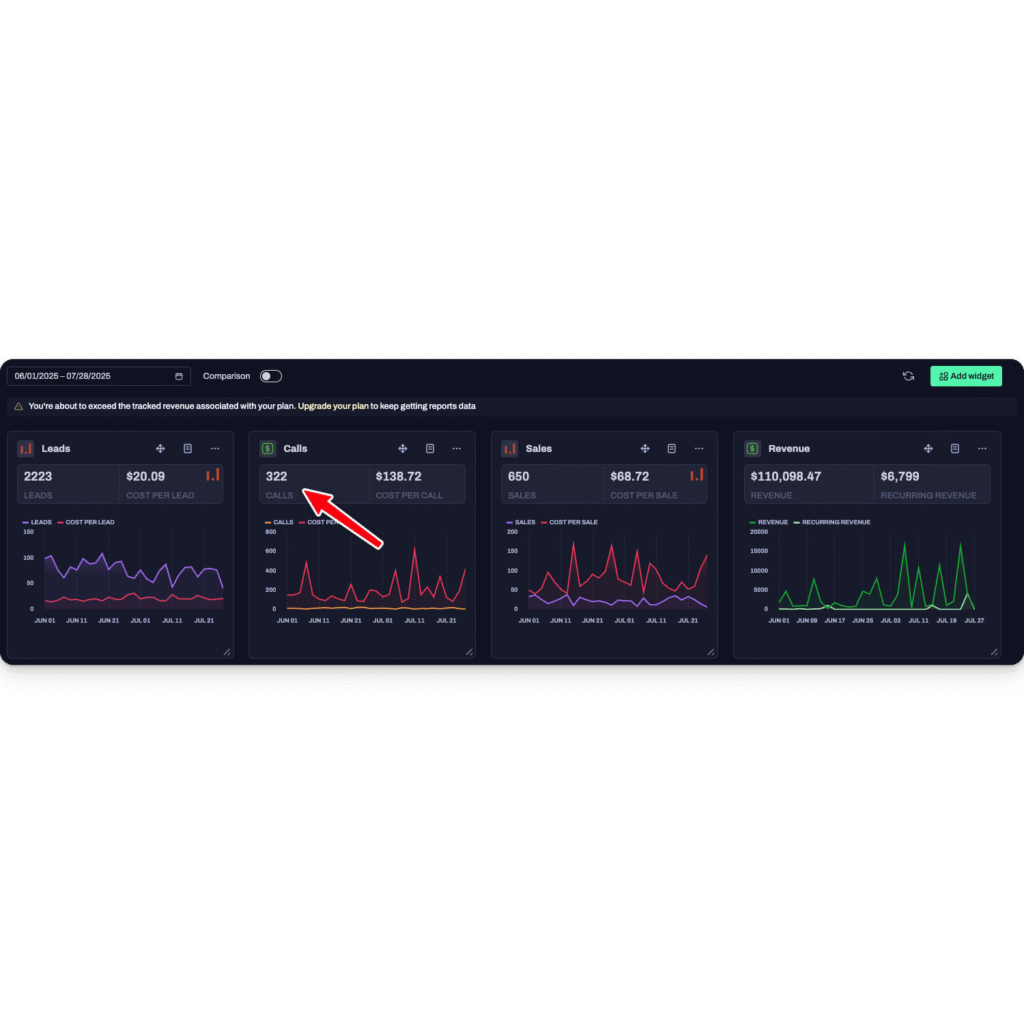
After building the same high-converting sales funnel over 500 times and booking 172 qualified calls just last month, I’m revealing the exact system that books our clients thousands of calls monthly without lifting a finger. This isn’t theory—it’s the proven sales funnel that books calls consistently across every industry we’ve tested.
If you’re not booking as many qualified calls as you’d like, it’s because you’re either missing this complete funnel system or you don’t have one at all. Most businesses fail at lead generation because they focus on individual tactics instead of building a cohesive sales funnel that books calls systematically. This comprehensive guide shows you exactly how to build and optimize every component.
The Fatal Funnel Mistakes Killing Your Call Volume
Most businesses struggle with three core problems that prevent them from building a sales funnel that books calls effectively. First, they’re not getting enough traffic to their offers. Second, when they do get traffic, it’s not congruent with their messaging, creating confusion and abandoned sessions. Third, they’re stuck beating their head against the wall trying random tactics instead of following a proven system.
The biggest mistake companies make is trying to skip the nurture sequence and go straight for the sale. This is like asking someone to marry you on the first date—it doesn’t work. A proper sales funnel that books calls requires building trust, providing value, and guiding prospects through a logical journey from awareness to appointment booking.
Another critical error is lack of congruence between ad creative, landing pages, and follow-up sequences. When your ad promises one thing but your landing page delivers something different, conversion rates plummet. Every element of your sales funnel that books calls must tell the same story and maintain consistent messaging throughout the entire customer journey.
The final mistake is poor targeting and creative strategy. Too many businesses rely on demographic targeting instead of creating ads that self-select the right audience through pattern matching and pain point identification. Your creative should make it obvious who the ad is for and irrelevant to everyone else.
The Pattern Match Method: How to Make Meta Find Your Perfect Customers
The secret to building a sales funnel that books calls starts with understanding that you don’t need complex targeting anymore. Instead of obsessing over audience demographics, successful campaigns use pattern matching in the creative itself to attract the right prospects. When your ad creative contains specific visual elements, tools, and scenarios that only your ideal customer recognizes, Meta’s algorithm automatically finds similar people.
Pattern matching works by including recognizable elements in your ad creative that immediately identify your target audience. For example, if you’re targeting small business IT decision-makers, your creative should show business owners with recognizable tools like Outlook, LinkedIn, Gmail, and HubSpot. These visual cues signal to Meta’s algorithm exactly who should see your ad.
The most effective sales funnel that books calls uses broad targeting (Advantage+ campaigns) combined with highly specific creative elements. This approach lets Meta’s powerful algorithm do the heavy lifting while your creative acts as the targeting mechanism. The result: dramatically lower costs per click and higher conversion rates compared to narrow audience targeting.
Your ad creative should include pattern interrupts alongside pattern matching. While pattern matching attracts the right audience, pattern interrupts stop them from scrolling past your ad. Use contrarian statements like “Cold Outreach is Dead” or “Your DMs Are Dead” to create curiosity and engagement. This combination ensures your sales funnel that books calls starts with high-quality, engaged prospects.
The Four Critical Elements of High-Converting Ad Creative
Every sales funnel that books calls begins with ads that contain four essential elements: creative, headline, lead-in, and primary text. The creative (image or video) is most important, followed by the headline, then the lead-in (first sentence visible before “see more”), and finally the primary text. Understanding this hierarchy helps prioritize optimization efforts for maximum impact.
The creative must contain clear pattern matching elements that resonate with your ideal customer. If you’re targeting SaaS owners, show business dashboards, sales charts, and professional settings that immediately communicate relevance. Include people who look like your target demographic engaging with tools and scenarios they recognize from their daily work life.
Your headline should call out the specific person you’re targeting while highlighting their primary desire or pain point. For example: “5 Secrets to Book 100+ Demos if You’re a SaaS/Tech Owner Who Needs More Qualified Demos.” This headline immediately identifies who the ad serves while promising a specific, desirable outcome.
The lead-in serves as your hook—the first sentence people see before clicking “see more.” This must grab attention and create curiosity. Use pain-focused statements like “Filling your sales team’s calendar with appointments feels like crawling on broken glass” to immediately resonate with prospects experiencing that exact frustration.
Lead Magnet Landing Pages That Convert at 18-24%
The second step in any sales funnel that books calls is a high-converting landing page that captures leads through valuable free offers. Despite claims that lead magnets are dead, they remain the most effective way to start relationships with prospects who aren’t ready to buy immediately. The key lies in execution and congruence with your ad messaging.
Your landing page must maintain perfect congruence with your ad creative and copy. If your ad talks about booking 100+ demos, your landing page headline should reference the same outcome. The visual elements, color schemes, and messaging should feel like a natural continuation of the ad experience, not a completely different offer.
The optimal landing page structure includes five essential elements: eyebrow (audience callout), headline, subhead, relevant image, and above-the-fold button. Keep it simple—most visitors won’t scroll, so everything important must be visible immediately. The button should be large, contrasting, and positioned prominently above the fold on both desktop and mobile versions.
Our landing pages consistently convert at 18-24% from cold traffic, with some achieving 30%+ from organic sources. Industry average is around 2%, so 15%+ represents excellent performance. If you’re not achieving these conversion rates, focus obsessively on headline testing. The headline represents 80% of your conversion power—test it relentlessly until you find the winner.
The VSSL Strategy: Converting Leads to Booked Calls
The third component of a sales funnel that books calls is a Video Sales Letter (VSL) that bridges the gap between your free offer and booking a consultation. Not everyone who downloads your lead magnet is ready to book immediately, but some are. The VSL identifies and converts these high-intent prospects while nurturing others through your email sequence.
Your VSL page should mirror your landing page structure with one critical addition: the video itself. The eyebrow should reference their recent download: “Hey, wait—while your free report is downloading, watch this video.” This creates natural flow from the previous step while providing additional value and qualification.
The VSL should be 10-15 minutes long and follow a proven structure: disqualify wrong prospects, engage the right ones, build trust through proof and testimonials, present your unique mechanism, handle common objections, and provide a clear call-to-action. The goal is 30%+ throughput to your booking page, meaning 300+ people should click to book for every 1,000 VSL viewers.
VSL optimization focuses on the hook (first 30 seconds) and retention throughout the video. Test different openings, social proof elements, and call-to-action timing. Use tools like Microsoft Clarity to analyze viewer behavior and identify drop-off points. Remember: the VSL’s job isn’t to sell—it’s to qualify prospects and create urgency for booking a consultation.
Email Sequences That Nurture Prospects Into Customers
The backbone of any sales funnel that books calls is a sophisticated email nurture sequence that builds relationships with prospects over time. Most people aren’t ready to buy immediately, but proper email nurturing converts them into customers weeks or months later. This is where most businesses fail—they give up too early instead of playing the long game.
Your email sequence should start with a welcome email delivered 10 minutes after opt-in. This email delivers the promised lead magnet while setting expectations for future communications. Establish your brand voice, explain who you help and who you don’t, and pick an enemy (status quo, outdated methods, etc.) to create an “us vs. them” mentality.
The three-hour follow-up email serves multiple purposes: improve deliverability by encouraging replies, gather additional prospect information, and maintain engagement. Ask prospects to reply with their biggest challenge from a list of common problems. This simple tactic dramatically improves email deliverability while providing valuable prospect insights.
Your core nurture sequence should include 5-8 emails sent every two days, focusing on indoctrination rather than selling. Tell your story, share customer success cases, handle common objections, and address “special snowflake” situations where prospects think they’re different. Each email should provide value while moving prospects closer to booking a consultation.
The Deadline Sequence: Creating Urgency That Converts
After your main nurture sequence, implement a deadline sequence that creates urgency and drives immediate action. This consists of 3-5 emails sent daily over consecutive days, each building urgency around a limited-time opportunity to book a consultation. The deadline sequence often produces the highest conversion rates in your entire funnel.
Structure your deadline sequence around scarcity and social proof. Reference high demand for your services, limited calendar availability, and current client results. Include testimonials, case studies, and specific outcomes to reinforce the value of booking a call. Make the reason for urgency logical and believable rather than manufactured.
Each deadline email should approach the opportunity from different angles: logical (business case for action), emotional (cost of inaction), social proof (others are taking advantage), and final reminder (last chance). This multi-angle approach reaches different personality types and decision-making styles within your audience.
After the deadline sequence, transition prospects to your long-term newsletter for ongoing nurturing. Tag them appropriately so they don’t receive promotional emails during active nurture sequences. Some prospects take months or years to convert, but since you’ve already paid for the lead, continued nurturing costs almost nothing while providing unlimited upside.
SMS Integration: The Secret to 40% More Booked Calls
The often-overlooked component of a sales funnel that books calls is SMS integration that captures prospects who don’t respond to email. Our SMS bot books 40% of our calls by engaging prospects through their preferred communication channel. Unlike aggressive SMS marketing, this approach focuses on helpful questions and genuine conversation.
Your SMS sequence should ask questions rather than making pitches. Start with simple inquiries about their business, current challenges, and goals. The AI bot can maintain natural conversations while identifying high-intent prospects ready for consultation. This approach feels helpful rather than salesy, leading to higher engagement and conversion rates.
Implement persistent but polite follow-up through SMS. If prospects don’t respond, the system continues reaching out every 3, 5, 7, 10, 15, and 20 days with helpful questions and resources. This persistence captures prospects when their situation changes or priorities shift, often months after initial contact.
SMS integration requires sophisticated automation platforms like GoHighLevel that can manage complex sequences and AI-powered conversations. The investment pays for itself through increased booking rates and recovered prospects who would otherwise be lost. Remember: 41% of qualified prospects prefer SMS communication over email or phone calls.
Qualification Systems: Booking Only High-Value Prospects
The final component of a sales funnel that books calls is proper prospect qualification before they reach your calendar. Not every lead deserves your time—qualification systems ensure you speak only with prospects who have budget, authority, need, and timeline (BANT) to become customers.
Your booking page should include qualification questions that filter prospects before they access your calendar. Ask about budget ranges, decision-making authority, timeline for implementation, and specific challenges they’re facing. Use this information to automatically approve or reject booking requests based on your ideal customer criteria.
Implement a “this is not for you, please leave” section on your booking page that politely discourages unqualified prospects. Be specific about who you don’t work with: businesses under certain revenue thresholds, individuals without decision-making authority, or companies not experiencing specific problems you solve.
Use your CRM to automatically cancel appointments with unqualified prospects. If someone books but doesn’t meet your criteria, send a polite cancellation email explaining why you’re not a good fit and potentially referring them to more appropriate resources. This saves time while maintaining goodwill and professional reputation.
Measuring and Optimizing Your Sales Funnel Performance
A successful sales funnel that books calls requires continuous measurement and optimization based on key performance indicators. Track metrics at each stage: ad click-through rates, landing page conversion rates, VSL throughput percentages, email open and click rates, and ultimately, booking and close rates.
Your ad campaigns should achieve $2-3 cost per click for most B2B offers, though this varies by industry and competition level. Test 40+ new ad creatives weekly to maintain performance as algorithm and audience preferences change. Scale winning ads while rapidly turning off underperformers to maximize ROI.
Landing page optimization focuses primarily on headline testing since it represents 80% of conversion power. Test headlines every 500 unique visitors until you achieve 15%+ conversion rates. Other elements to test include button color/text, image selection, and page layout, but always test one element at a time for clear results.
Email sequence optimization requires monitoring open rates, click rates, and reply rates for each message. Welcome emails typically achieve highest open rates, so maximize their impact through strong storytelling and expectation setting. Optimize subject lines, send times, and content based on audience engagement patterns and feedback.
Scaling Your Sales Funnel That Books Calls
Once you’ve built a sales funnel that books calls consistently, scaling requires systematic expansion while maintaining quality. Start by increasing ad spend on proven campaigns while continuously testing new creative angles and audience segments. Successful scaling maintains or improves conversion metrics while increasing overall volume.
Develop multiple lead magnets targeting different audience segments or pain points within your market. This allows broader targeting while maintaining message-market fit for each segment. Each lead magnet should feed into customized nurture sequences addressing specific audience needs and objections.
Create multiple VSLs testing different hooks, stories, and presentations of your core offer. Some prospects respond better to case study approaches, others prefer direct problem-solution presentations. Multiple VSLs allow broader appeal while maintaining high conversion rates across different personality types.
Build advanced segmentation within your email sequences based on prospect behavior, industry, company size, or other relevant factors. Customized messaging increases relevance and conversion rates while reducing unsubscribe rates and spam complaints. Advanced segmentation often doubles or triples email sequence performance.
Ready to Build Your Sales Funnel That Books Calls?
This complete system represents years of testing and optimization across hundreds of campaigns and thousands of clients. Every component works together to create a predictable, scalable machine for generating qualified sales consultations. The difference between success and failure lies in proper implementation and continuous optimization of each element.
Most businesses fail because they try to build complex funnels without mastering the fundamentals. Start with the basic structure outlined here, achieve consistent performance at each stage, then add advanced features and optimization. Complexity without fundamentals leads to confusion and poor results.
Ready to implement this proven sales funnel system for your business? Book a strategy consultation to discover how we can build and optimize your complete sales funnel that books calls consistently.
Want to build this sales funnel yourself? Download our complete funnel templates, email sequences, and optimization checklists to implement this system in your business.
Stop leaving money on the table with incomplete or ineffective funnels. Start building a sales funnel that books calls systematically and scales predictably for long-term business growth.