
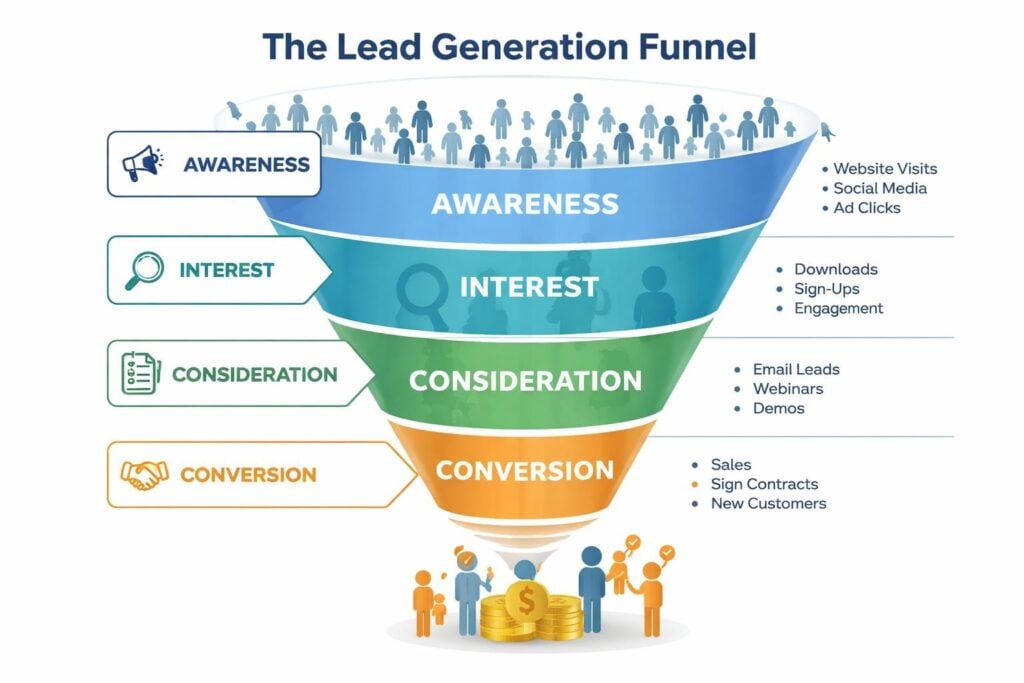
Understanding leads in digital marketing isn't just important-it's the difference between thriving businesses and those struggling to survive. Every successful campaign, every profitable quarter, and every breakthrough growth moment starts with one fundamental element: qualified leads. In 2026, the digital landscape has evolved dramatically, yet the core principle remains unchanged: without a steady stream of high-quality leads, even the most brilliant products and services will languish in obscurity. The businesses winning today aren't just generating more leads; they're generating better leads through strategic, data-driven approaches that align perfectly with modern buyer behavior.
What Are Leads in Digital Marketing
Leads in digital marketing represent potential customers who have demonstrated interest in your product or service by providing contact information or engaging with your brand. These aren't random website visitors-they're prospects who've taken a specific action indicating purchase intent.
A qualified lead typically exhibits these characteristics:
- Provided verifiable contact information (email, phone number, or social media)
- Engaged with your content or marketing materials
- Fits your ideal customer profile demographics
- Demonstrated specific pain points your solution addresses
- Shown timeline indicators for potential purchase decisions
The quality of leads matters exponentially more than quantity. One hundred highly qualified leads will always outperform one thousand cold prospects who barely match your customer profile.
The Lead Generation Hierarchy
Not all leads carry equal value. Understanding the hierarchy helps you allocate resources effectively.
| Lead Type | Characteristics | Conversion Potential | Nurturing Required |
|---|---|---|---|
| Cold Leads | Minimal interaction, basic awareness | 1-3% | Extensive |
| Warm Leads | Multiple touchpoints, active engagement | 8-15% | Moderate |
| Hot Leads | Purchase-ready, urgent need identified | 25-40% | Minimal |
| Qualified Leads | Verified budget, authority, need, timeline | 45-65% | Strategic closing |
This framework reveals why creating authoritative content that attracts the right prospects transforms your entire lead generation approach.
Strategic Channels for Generating Digital Marketing Leads
The channels you choose directly impact the quality and cost of leads in digital marketing. Smart businesses diversify their approach while doubling down on what delivers results.
Content Marketing and SEO
Content remains the foundation of sustainable lead generation. When you publish valuable, authoritative content, you attract prospects actively searching for solutions.
High-performing content types include:
- Comprehensive guides addressing specific industry challenges
- Case studies demonstrating measurable results
- Tools and calculators providing immediate value
- Video tutorials solving common problems
- Industry research reports establishing thought leadership
Search engine optimization amplifies your content's reach. Understanding E-E-A-T signals for lead generation ensures your content builds the trust necessary for converting visitors into leads.
Paid Advertising Platforms
Paid channels accelerate lead generation when executed strategically. The key lies in precise targeting and continuous optimization.
Google Ads excels for capturing high-intent searches. When prospects actively search for solutions, your strategically positioned ads convert at impressive rates. LinkedIn Ads dominate B2B lead generation, offering unmatched targeting capabilities based on job titles, company size, and industry.
Facebook and Instagram advertising work brilliantly for broader awareness campaigns and retargeting website visitors who haven't converted yet. The pixel tracking capabilities enable sophisticated audience building that improves campaign performance over time.
Email Marketing and Automation
Email remains one of the highest-ROI channels for nurturing leads in digital marketing. Automation systems transform single opt-ins into relationship-building sequences that guide prospects toward purchase decisions.
Effective email sequences include:
- Welcome series introducing your brand story and value proposition
- Educational content addressing specific pain points
- Social proof showcasing customer success stories
- Limited-time offers creating urgency for decision-making
- Re-engagement campaigns recovering dormant leads
Segmentation multiplies email effectiveness. Sending targeted messages based on behavior, demographics, and engagement history converts significantly better than generic broadcasts.
Capturing and Qualifying Leads Effectively
The capture mechanism determines whether interested prospects become leads or bounce away forever. Every element of your lead capture system requires strategic optimization.
Conversion-Focused Landing Pages
Landing pages stripped of distractions and laser-focused on single objectives convert dramatically better than generic website pages. Your landing page must answer three critical questions within seconds: What's in it for me? Why should I trust you? What happens next?
Essential landing page elements:
- Compelling headline stating the specific benefit
- Subheadline clarifying the unique value proposition
- Visual demonstration of the solution or outcome
- Trust indicators like testimonials, certifications, or client logos
- Clear, action-oriented call-to-action button
- Minimal form fields requesting only essential information
Testing reveals that reducing form fields from seven to three can increase conversion rates by 120% or more. Only ask for information you'll immediately use.
Lead Magnets That Attract Quality Prospects
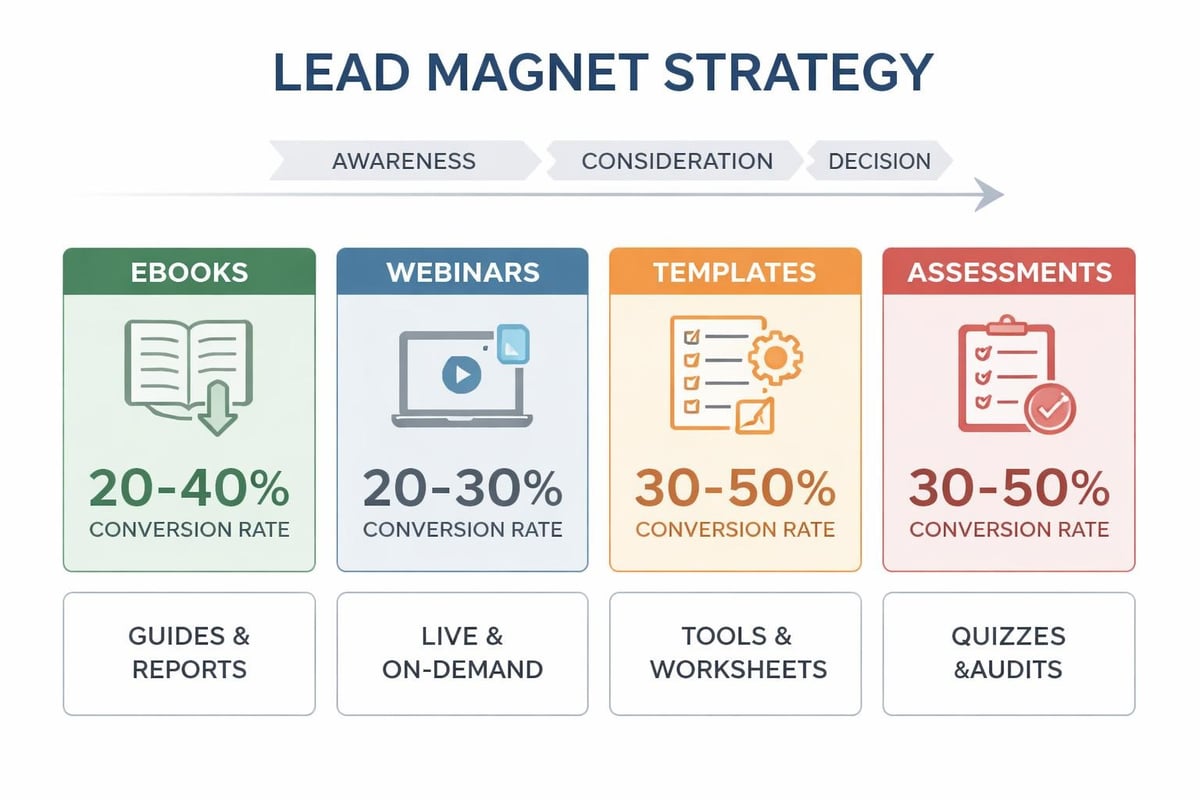
Lead magnets exchange valuable content for contact information. The most effective magnets solve immediate, specific problems your ideal customers face right now.
Templates and worksheets provide instant utility. When prospects download a ready-to-use resource, they experience immediate value while simultaneously qualifying themselves based on the problem they're solving.
Webinars and video trainings work exceptionally well for complex solutions requiring education. The live or recorded format builds deeper connections than written content alone. Assessments and quizzes engage prospects while gathering qualification data disguised as personalized results.
Industry reports and original research establish authority while attracting senior decision-makers. Creating authoritative content that Google and readers trust positions your brand as the go-to resource in your space.
Progressive Profiling and Data Enrichment
You don't need every data point immediately. Progressive profiling gathers information incrementally across multiple interactions, reducing form abandonment while building comprehensive prospect profiles.
First interaction: Name and email
Second interaction: Company and role
Third interaction: Specific challenges and timeline
Data enrichment tools automatically append firmographic and demographic data to email addresses, providing sales teams with context before the first conversation. This intelligence transforms cold outreach into warm, personalized engagement.
Nurturing Leads Through the Buyer Journey
The fortune lives in the follow-up. Most leads aren't ready to buy immediately, making systematic nurturing essential for maximizing conversion rates.
Multi-Touch Attribution and Engagement Tracking
Understanding which touchpoints influence conversion decisions enables smarter resource allocation. Multi-touch attribution reveals the customer journey's complexity, typically spanning 8-12 interactions before purchase.
| Touchpoint | Typical Position | Conversion Influence |
|---|---|---|
| Organic Search | Awareness | 15-20% |
| Social Media | Awareness/Consideration | 10-15% |
| Email Nurture | Consideration | 25-30% |
| Direct Website | Decision | 20-25% |
| Sales Conversation | Decision | 30-40% |
Behavioral tracking identifies engagement patterns signaling purchase readiness. When leads visit pricing pages, download case studies, or attend product demos, they're broadcasting buying signals demanding immediate sales follow-up.
Personalized Content Delivery
Generic messaging gets ignored. Personalization based on industry, role, company size, and demonstrated interests increases engagement rates by 200-300%.
Dynamic content blocks adapt email and website content based on known prospect attributes. A CFO sees ROI-focused messaging while a CMO receives brand-building content, both viewing the same campaign through personalized lenses.
Retargeting campaigns deliver increasingly specific messages based on previous interactions. Someone who downloaded your industry guide receives ads promoting your webinar, while webinar attendees see case studies, and case study readers receive demo invitations.
Lead Scoring Models
Not every lead deserves equal attention. Scoring systems assign numerical values based on demographic fit and behavioral engagement, enabling sales teams to prioritize conversations with the highest-probability prospects.
Demographic scoring criteria:
- Company size matches ideal customer profile: +15 points
- Job title indicates decision-making authority: +20 points
- Industry alignment with specialization: +10 points
- Geographic territory coverage: +5 points
Behavioral scoring criteria:
- Email open: +2 points
- Link click: +5 points
- Content download: +10 points
- Pricing page visit: +20 points
- Demo request: +50 points
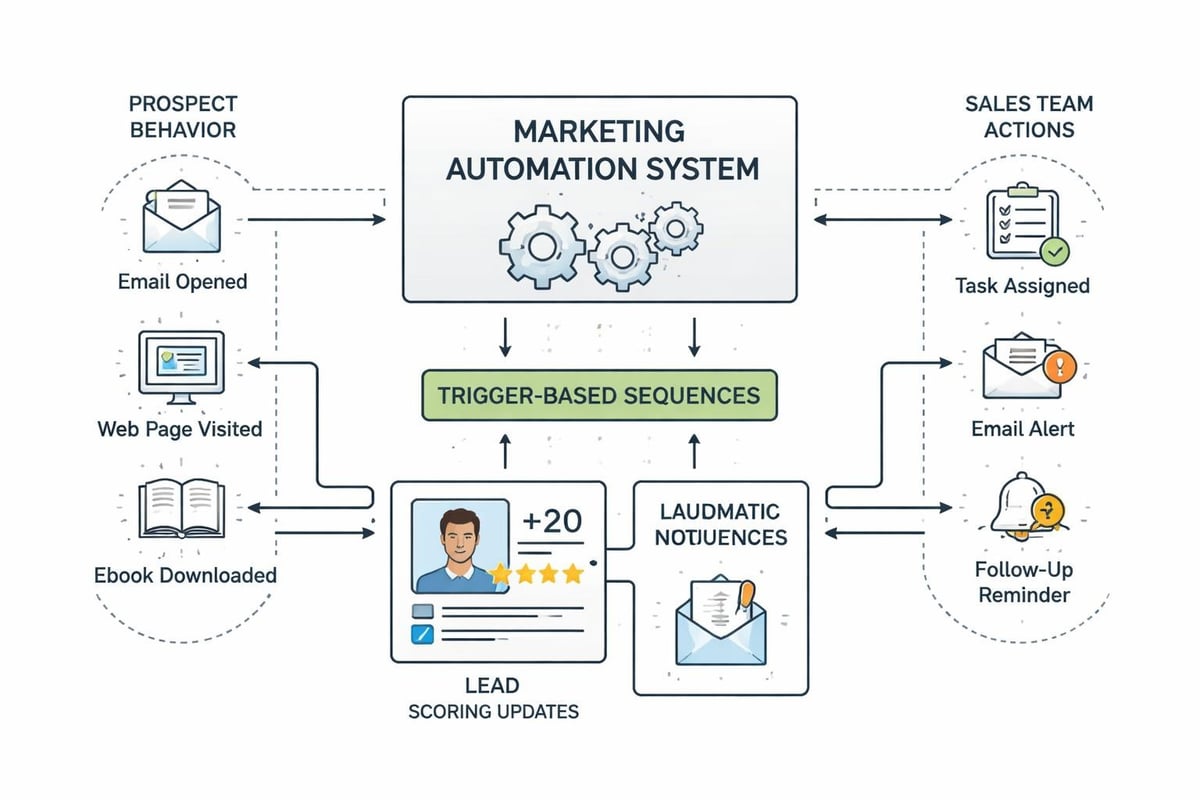
Leads reaching predetermined thresholds trigger automatic notifications to sales representatives, ensuring hot prospects receive immediate attention while marketing continues nurturing lower-scored contacts.
Converting Leads Into Customers
The handoff between marketing and sales determines whether carefully nurtured leads in digital marketing become revenue or evaporate through the cracks.
Sales and Marketing Alignment
Friction between sales and marketing teams destroys conversion potential. Aligned organizations define lead quality collaboratively, establish service-level agreements for follow-up timing, and share accountability for revenue outcomes.
Critical alignment areas include:
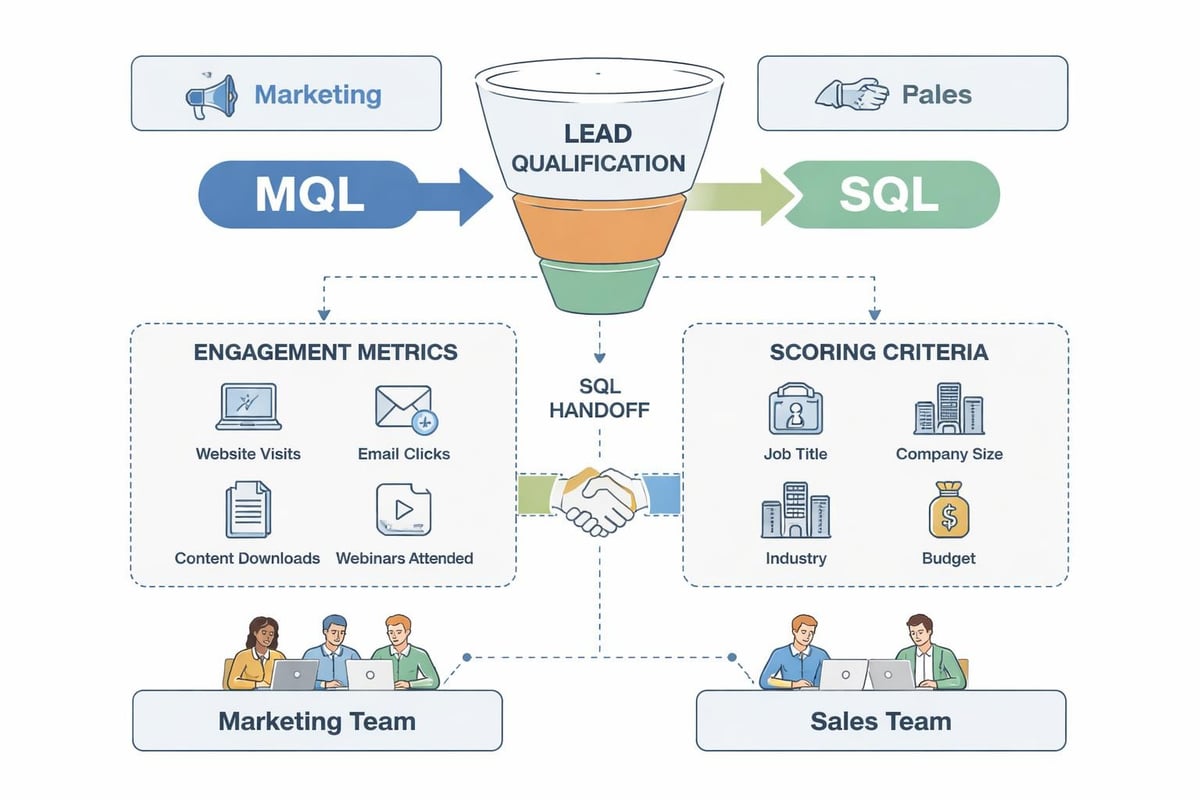
- Unified definition of marketing-qualified and sales-qualified leads
- Agreed-upon lead scoring thresholds triggering sales outreach
- Feedback loops communicating lead quality and conversion rates
- Shared dashboards tracking pipeline progression and revenue attribution
- Regular meetings reviewing campaign performance and optimization opportunities
When marketing understands which leads actually close and why, campaign optimization accelerates dramatically. Understanding how authoritative backlinks enhance digital marketing and brand credibility supports both teams' efforts to attract better-qualified prospects.
Conversation Optimization Strategies
The first sales conversation either builds momentum or kills opportunities. Preparation, personalization, and problem-focused discovery separate top performers from mediocre results.
Research prospects thoroughly before calls. Reference their recent content downloads, website visits, and social media activity. Demonstrate you understand their business challenges by mentioning specific industry trends or competitive pressures.
Ask diagnostic questions uncovering root problems rather than pitching solutions prematurely. The prospect who talks 70% of the conversation while the sales representative listens actively converts far more often than the inverse.
Technology Stack Integration
Disconnected systems create data silos, missed opportunities, and frustrating prospect experiences. Integrated marketing and sales technology ensures seamless handoffs and complete visibility.
Your CRM system should automatically receive every lead from every source-landing pages, chatbots, social media ads, and email replies. Marketing automation platforms track engagement across channels, updating lead scores and triggering nurture sequences based on behavior.
Calendar scheduling tools eliminate phone tag, letting prospects book meetings instantly while interest peaks. Conversation intelligence software records and analyzes sales calls, identifying coaching opportunities and successful talk tracks worth replicating.
Measuring and Optimizing Lead Generation Performance
What gets measured gets improved. Tracking the right metrics reveals optimization opportunities invisible through casual observation.
Critical Lead Generation Metrics
Volume metrics establish baseline performance:
- Total leads generated per channel
- Cost per lead by source
- Lead velocity (new leads per time period)
- Pipeline contribution by campaign
Quality metrics assess lead value:
- Marketing-qualified lead to sales-qualified lead conversion rate
- Sales-qualified lead to opportunity conversion rate
- Opportunity to customer close rate
- Average deal size by lead source
- Customer lifetime value by acquisition channel
The formula reveals powerful insights: If Channel A generates leads at $50 each with a 20% close rate while Channel B costs $150 per lead but closes at 60%, Channel B delivers superior ROI despite higher acquisition costs.
Conversion Rate Optimization Testing
Systematic testing multiplies results without increasing budget. Every element of your lead generation system deserves experimentation.
High-impact testing areas:
- Headline variations emphasizing different benefits
- Form length and field requirements
- Call-to-action button copy and color
- Lead magnet formats and topics
- Email subject lines and sending times
- Landing page layouts and visual hierarchy
Run tests with statistical significance before declaring winners. A/B testing platforms ensure valid results while multivariate testing explores complex interactions between multiple variables simultaneously.
Attribution and ROI Analysis
Determining which marketing investments drive actual revenue enables intelligent budget allocation. Attribution modeling connects closed revenue back to the campaigns and touchpoints that influenced purchase decisions.
First-touch attribution credits the initial interaction. Last-touch attributes revenue to the final touchpoint before purchase. Linear attribution distributes credit equally across all interactions. Time-decay models weight recent touchpoints more heavily than distant ones.
Sophisticated marketers combine multiple attribution models, understanding that reality involves complex journeys defying simple formulas. The key insight: know which channels initiate relationships, which nurture consideration, and which close deals, then optimize each stage independently.
Advanced Strategies for 2026 and Beyond
The most successful companies aren't just executing today's best practices-they're implementing tomorrow's competitive advantages right now.
AI-Powered Lead Intelligence
Artificial intelligence transforms lead generation from manual processes into predictive systems. Machine learning algorithms analyze thousands of data points, identifying patterns invisible to human observation.
Predictive lead scoring examines historical conversion data, identifying characteristics shared by customers who actually buy. The system automatically prioritizes prospects exhibiting similar attributes, even when individual signals seem insignificant.
Chatbots qualify leads 24/7, answering questions, gathering information, and scheduling meetings while your team sleeps. Natural language processing enables conversational interfaces that feel human while scaling infinitely.
Content recommendation engines personalize website experiences, showing each visitor the specific resources most likely to drive conversion based on similar prospect behavior. Knowing how to identify authoritative sources ensures your content recommendations build credibility.
Account-Based Marketing Integration
Traditional lead generation casts wide nets hoping to catch good fish. Account-based marketing spears specific whales worth landing.
ABM identifies high-value target accounts before generating leads, then orchestrates personalized campaigns designed to penetrate and influence buying committees. Instead of individual leads, you pursue entire organizations.
ABM execution requires:
- Detailed ideal customer profile defining target account characteristics
- Decision-maker mapping identifying all buying committee members
- Coordinated multi-channel campaigns reaching stakeholders simultaneously
- Personalized content addressing account-specific challenges
- Sales and marketing collaboration on account strategy
The approach demands more resources per account but delivers dramatically higher conversion rates and deal sizes when focused on genuinely qualified targets.
Privacy-First Lead Generation
Data privacy regulations and tracking limitations reshape lead generation strategies. The death of third-party cookies forces marketers toward first-party data collection and relationship-building.
Zero-party data-information prospects voluntarily share-becomes the new competitive advantage. Interactive tools, assessments, and preference centers gather insights directly from prospects while delivering value in exchange.
Email lists transform from broadcasting channels into owned media assets immune to platform algorithm changes. Building digital authority through impactful content creates direct relationships resistant to privacy disruptions.
Community building around your brand generates organic lead flow as members refer colleagues and share content within their networks. Gated communities requiring registration for access provide both qualification and ongoing engagement opportunities.
Conversion Rate Amplification Through Authority
Understanding how to determine if a website is authoritative helps you build the signals that convert skeptical visitors into trusting leads. Authority isn't just about rankings-it's the invisible force that makes prospects believe your claims and follow your recommendations.
Strategic link building from respected industry publications signals credibility to both search engines and human visitors. When prospects see you've been featured in authoritative outlets, trust barriers dissolve. Recognizing why authority links serve as game-changers in digital marketing transforms how you approach content promotion and relationship building.
Original research and proprietary data position your brand as an industry thought leader. When competitors cite your studies and journalists reference your findings, you've transcended vendor status to become a trusted resource.
Mastering leads in digital marketing requires strategic thinking, systematic execution, and continuous optimization across every touchpoint in the buyer journey. The businesses winning in 2026 combine proven fundamentals with emerging technologies, creating predictable growth engines that transform cold prospects into enthusiastic customers. If you're ready to stop chasing random leads and start generating qualified prospects who actually convert, Adstra leverages advanced AI systems to automate the entire process-from initial contact through appointment booking-with a guaranteed growth partnership model that aligns our success with yours.