
The marketing agency landscape is evolving faster than ever, with 2026 bringing new challenges and opportunities for every agency leader. Clients expect more measurable results, while technologies like AI and automation are transforming how agencies operate. As competition intensifies and client demands shift, having a future-proof marketing agency strategy becomes essential. In this article, you will discover seven proven strategies designed to help your agency stand out, scale with confidence, and deliver results that matter. Ready to unlock future-focused approaches for lasting agency success? Let’s dive in.
The Evolving Landscape of Marketing Agencies in 2026
The marketing agency strategy landscape is transforming at an unprecedented pace as 2026 approaches. Agencies are adapting to new demands, innovative technologies, and evolving regulations. To remain competitive and successful, every marketing agency strategy must address these shifts head-on.
Shifting Client Expectations
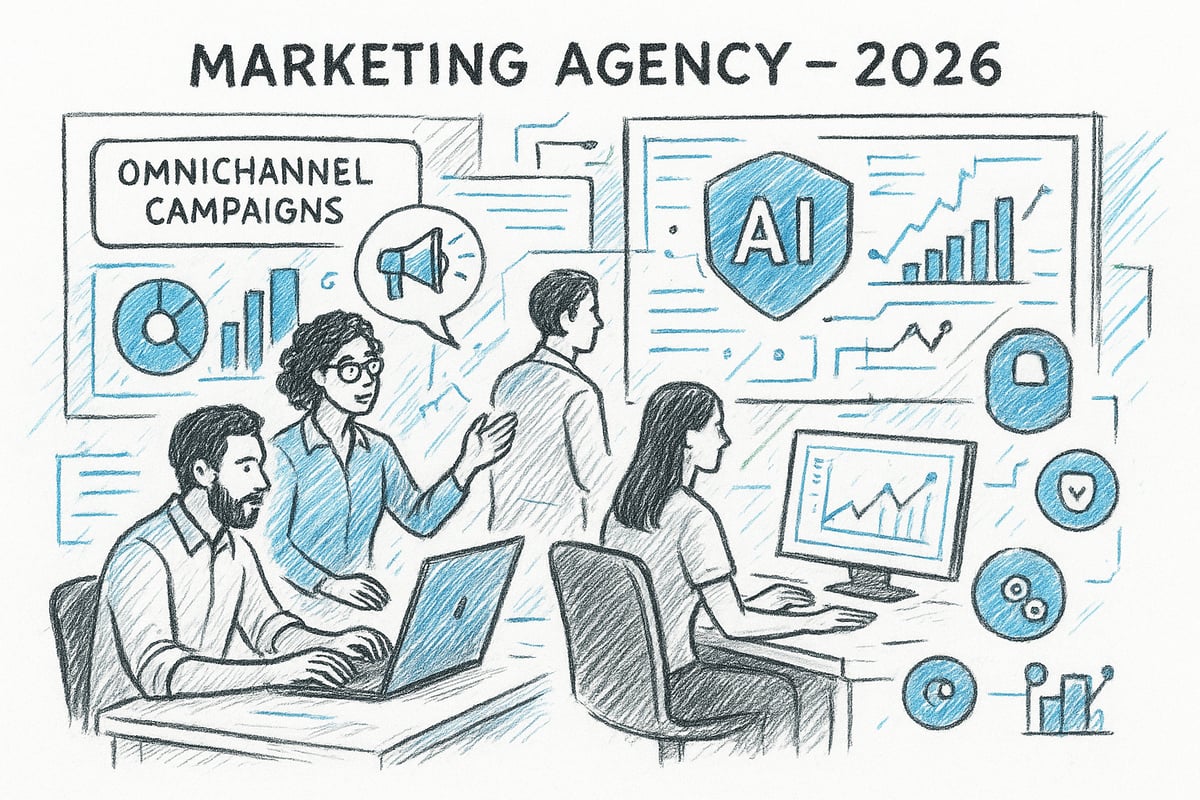
Client expectations are rising fast. Today’s clients want more than just creative campaigns, they expect measurable results and complete transparency. Many agencies are evolving their marketing agency strategy to focus on value-driven relationships and outcome-based pricing.
For example, some agencies now offer performance guarantees or shared-risk models. This shift increases mutual trust and demonstrates a commitment to client success. Clients also want faster results and clear ROI, so agencies must deliver tangible value at every step.
- Clients expect regular, detailed reporting.
- Transparent communication is essential.
- Value-based pricing is gaining traction.
Agencies that prioritize these elements in their marketing agency strategy build stronger, longer-lasting partnerships.
Impact of AI and Automation
AI and automation are fundamentally reshaping how agencies operate. Implementing AI-driven tools for lead generation, campaign optimization, and reporting is now standard practice. By 2026, it’s forecasted that 75% of agencies will use AI for client acquisition and retention, according to AI adoption in marketing agencies.
Automation helps eliminate manual, repetitive tasks, freeing teams to focus on strategic work. This evolution is redefining the marketing agency strategy, making agencies more agile and efficient.
- AI chatbots handle lead qualification 24/7.
- Automated workflows speed up campaign deployment.
- Predictive analytics enhance targeting and personalization.
Agencies embracing AI are positioned to outperform competitors and deliver better client outcomes.
Rise of Omnichannel and Personalization
Omnichannel marketing is now the expectation, not the exception. Agencies must integrate digital, social, and offline channels to create seamless experiences. A successful marketing agency strategy incorporates hyper-personalized messaging, leveraging real-time data to reach audiences with relevant content.
For instance, agencies are using AI to deliver individualized content at scale. Dynamic creative optimization ensures ads resonate with each segment, boosting engagement and conversions.
- Unified customer profiles guide campaign decisions.
- Real-time data powers adaptive messaging.
- Consistent branding across all platforms is essential.
Personalization, powered by technology, is a cornerstone of any forward-thinking marketing agency strategy.
Competition and Specialization
Competition is fiercer than ever. Niche agencies and in-house teams are challenging traditional models, driving a need for differentiation. A standout marketing agency strategy now often means specializing in a specific vertical, platform, or service.
Specialization allows agencies to offer unique expertise or proprietary technology stacks. This approach reduces competition and attracts clients seeking targeted solutions.
- Agencies are focusing on high-growth industries.
- Customized service offerings yield premium pricing.
- Specialized agencies are growing faster than generalists.
Standing out in a crowded field requires a clear, distinctive marketing agency strategy.
Data Privacy and Compliance
Data privacy is at the forefront of every marketing agency strategy today. With stricter regulations like GDPR and CCPA, agencies must ensure compliance in all activities. Sixty percent of clients now cite data privacy as a top concern when choosing an agency.
Ethical marketing practices and transparency around data usage are non-negotiable. Agencies that prioritize privacy build trust and stand out to risk-averse clients.
- Compliance processes protect both agency and client.
- Transparent data policies build credibility.
- Regular audits ensure ongoing adherence to regulations.
In 2026, a robust approach to privacy and compliance is a critical pillar of any marketing agency strategy.
7 Proven Marketing Agency Strategy Ideas for 2026 Success
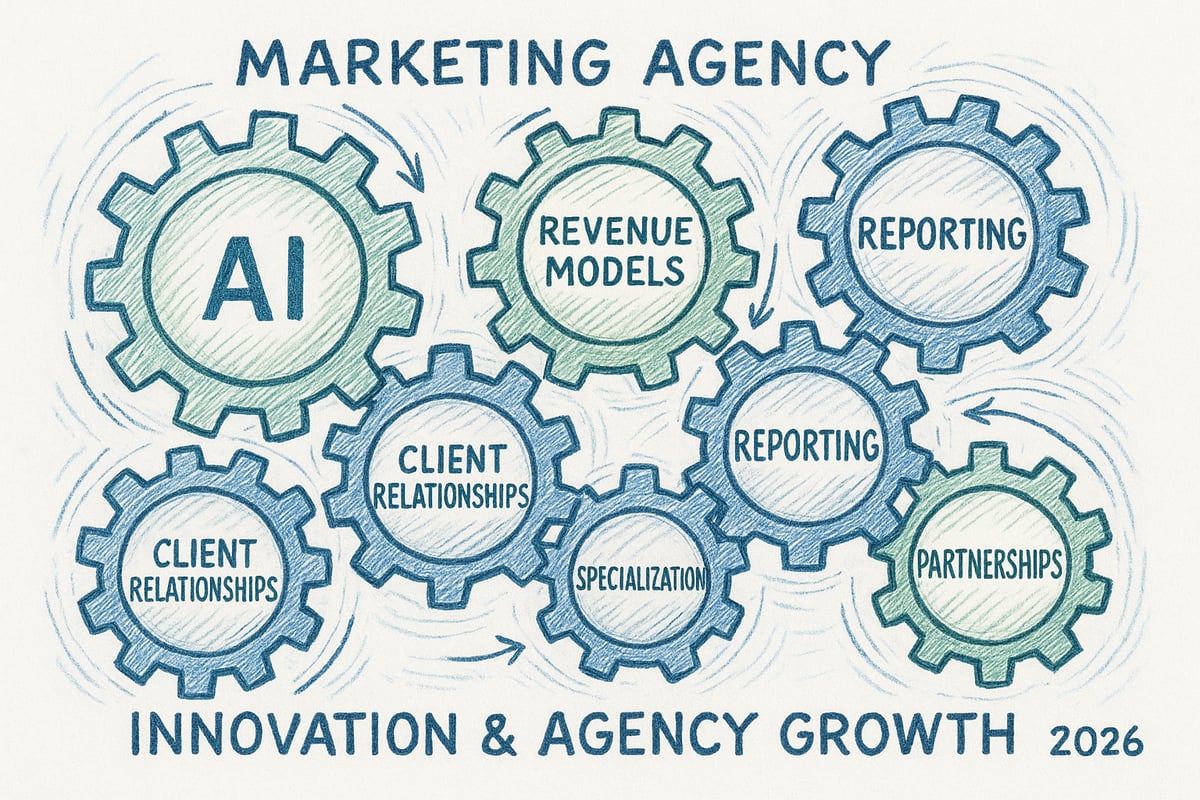
Staying ahead in the marketing agency strategy game requires more than just keeping up with trends; it demands proactive adaptation. Below, discover seven actionable strategies that forward-thinking agencies are using to stand out, scale, and consistently deliver results in 2026.
1. Embrace AI-Powered Lead Generation and Automation
AI is transforming how agencies approach lead generation and client acquisition. Modern marketing agency strategy now relies on AI-driven platforms to identify, score, and nurture leads with remarkable precision. By automating repetitive tasks like email outreach, appointment scheduling, and follow-ups, agencies can focus resources on strategic activities that drive growth.
For example, agencies deploying AI chatbots qualify leads around the clock, never missing an opportunity. This seamless automation not only shortens sales cycles but also increases lead quality and conversion rates. In fact, agencies using AI tools report a 40% boost in qualified appointments.
To gain a deeper understanding of advanced prospecting, explore Advanced Lead Generation Tactics, which delves into actionable approaches that are shaping the future of agency lead gen.
Early adoption of AI is no longer optional; it's a critical component of any successful marketing agency strategy. Agencies that embrace these technologies will maintain a competitive edge, streamline operations, and deliver more value to their clients.
2. Prioritize Predictable Revenue Models and Performance-Based Pricing
The days of relying solely on hourly or project-based billing are fading. A sustainable marketing agency strategy for 2026 involves shifting to retainer, subscription, or outcome-based pricing models. These approaches align agency compensation with client results, building trust and fostering long-term partnerships.
Performance-based pricing, such as fees tied directly to leads generated or conversions achieved, creates shared accountability. Agencies that embrace these models report 30% higher client retention rates, thanks to improved cash flow and greater loyalty.
Consider the impact in this table:
| Pricing Model | Client Retention | Cash Flow Stability | Trust Factor |
|---|---|---|---|
| Hourly/Project-Based | Low | Fluctuating | Moderate |
| Retainer/Outcome | High | Stable | High |
A marketing agency strategy built on predictability and performance not only differentiates your agency but also deepens client relationships. Clients want partners who are invested in their growth, and these models deliver exactly that.
3. Adopt Advanced Personalization and Omnichannel Campaigns
Personalization is no longer a nice-to-have—it's an expectation. Leading marketing agency strategy now integrates data from multiple channels to build unified customer profiles, enabling agencies to deliver hyper-personalized content and offers across web, email, social, and even offline touchpoints.
Dynamic creative optimization allows agencies to tailor ad campaigns in real time for each audience segment. The results are compelling: personalized campaigns generate a 20% lift in conversion rates on average.
Omnichannel strategies ensure that every client interaction feels seamless and relevant, no matter where it happens. Today, clients demand this level of integration as a baseline, not a bonus.
To elevate your marketing agency strategy, focus on creating consistent, meaningful experiences at every stage of the customer journey. This approach not only boosts engagement and ROI but also sets your agency apart as a leader in personalization.
4. Invest in Transparent Reporting and Real-Time Analytics
Transparency is a cornerstone of a successful marketing agency strategy. Clients expect clear, real-time data on campaign performance, and agencies that deliver this stand out in a crowded market.
By implementing live dashboards and automated proof-of-performance reports, agencies empower clients with visibility and control. For instance, offering clients access to campaign dashboards builds trust, reduces churn, and encourages proactive collaboration.
Consider these reporting essentials:
- Real-time analytics dashboards
- Automated performance summaries
- Customizable metrics by client
A recent survey found that 68% of clients cite transparency as a key factor in their agency satisfaction. By making reporting a core part of your marketing agency strategy, you not only differentiate your services but also foster long-term loyalty.
5. Build Specialized Service Offerings for Niche Markets
Generalist agencies face increasing competition, but specialization offers a powerful way to stand out. By focusing your marketing agency strategy on high-growth verticals—such as healthcare, SaaS, or e-commerce—you can develop deep expertise and tailored solutions that command premium pricing.
For example, agencies specializing in local SEO for multi-location businesses achieve faster growth and attract clients seeking proven authority in their sector. Data shows that niche agencies grow 35% faster than their generalist counterparts.
Specialization brings several benefits:
- Reduced competition
- Higher margins
- Stronger client relationships
A targeted marketing agency strategy not only drives inbound leads but also builds your reputation as a go-to expert in your chosen field.
6. Foster Collaborative, Value-Driven Client Relationships
Clients today want more than just a vendor; they want a strategic partner. A winning marketing agency strategy involves shifting to consultative selling, where agencies co-create goals, KPIs, and growth plans with clients.
Running joint workshops, quarterly strategy sessions, and open communication channels leads to higher client satisfaction and more upsell opportunities. Agencies that prioritize proactive engagement see 25% higher retention rates.
To further explore how to attract and retain more clients through value-driven relationships, read Building Value-Driven Client Relationships.
Value-driven relationships are the foundation of long-term success. By embedding yourself in your clients' success stories, you create a marketing agency strategy that fosters loyalty, referrals, and mutual growth.
7. Scale Efficiently with White-Label Solutions and Strategic Partnerships
Scaling without ballooning overhead is crucial for every marketing agency strategy in 2026. White-label platforms allow agencies to expand their service offerings—such as reselling AI-powered marketing tools—without hiring additional staff.
Strategic partnerships with tech providers, creatives, or niche experts also enable agencies to diversify and stay agile. In fact, 50% of fast-growing agencies now use white-label or partner solutions to accelerate growth.
Here’s how scaling with partners benefits your agency:
- Faster go-to-market with new services
- Increased revenue streams
- Greater operational flexibility
A marketing agency strategy that leverages partnerships and white-label tools ensures your agency can adapt quickly, broaden its reach, and remain competitive in a dynamic marketplace.
Key Technologies and Tools Powering 2026 Agency Strategies
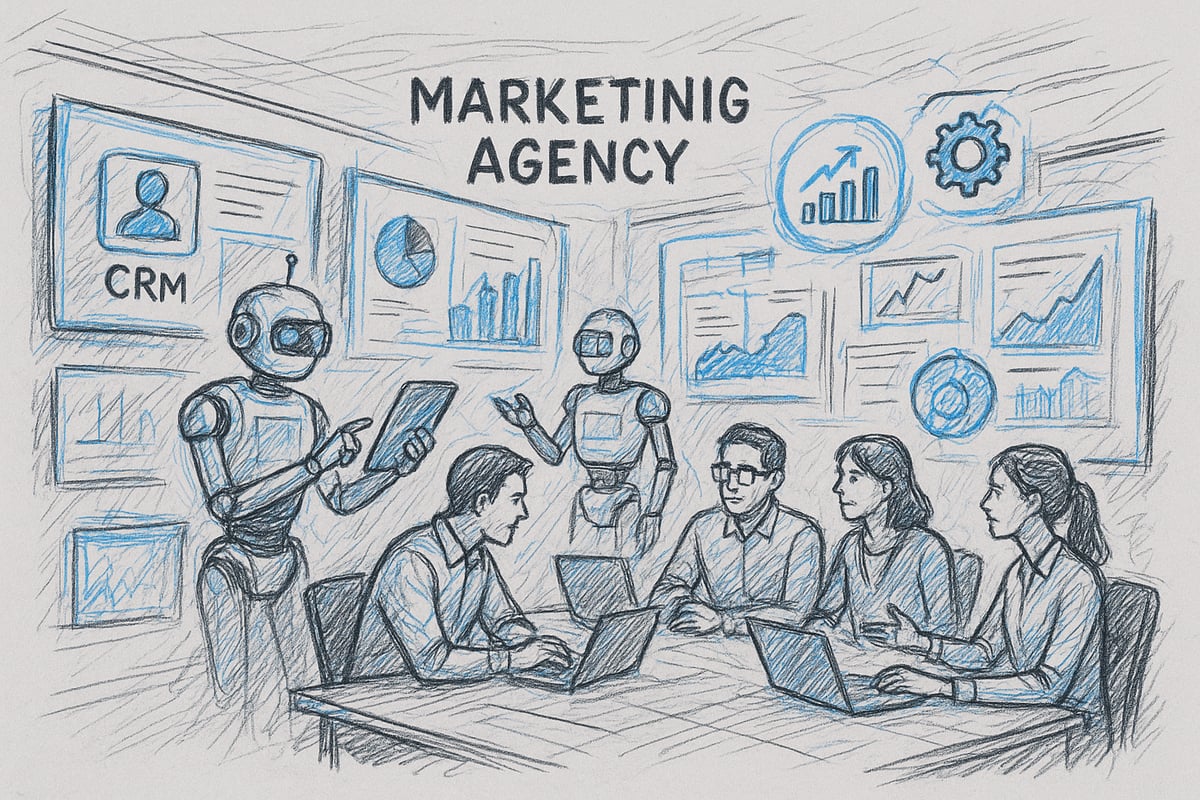
In 2026, every successful marketing agency strategy relies on a robust technology stack. Agencies must adapt, automate, and integrate to gain a true competitive edge. The right mix of platforms will help agencies deliver results, scale operations, and build trust with clients.
AI and Machine Learning Platforms
Artificial intelligence is now the backbone of any future-ready marketing agency strategy. Agencies use AI for everything from predictive lead scoring to campaign optimization and content creation. For example, AI platforms help agencies identify high-converting prospects and automate testing for maximum ROI.
By 2026, agencies deploying AI tools will see campaigns launched twice as fast as competitors. These advancements enable smarter decision-making and free up time for creative, strategic work. For a deeper dive into how AI is transforming advertising, explore AI in Digital Advertising.
CRM and Client Portal Solutions
A marketing agency strategy is only as strong as its client relationships. Centralized CRM and client portal solutions keep every project, lead, and conversation organized. White-label CRM platforms are gaining popularity, letting agencies brand every touchpoint and streamline onboarding.
These tools simplify task management, track interactions, and provide clients with transparency. The result is smoother workflows, fewer bottlenecks, and a more professional experience that drives retention.
Reporting and Analytics Dashboards
Real-time analytics and transparent reporting are now non-negotiable for any marketing agency strategy. Agencies use customizable dashboards to track campaign performance, ROI, and KPIs at a glance. Automated proof-of-performance reporting tools give clients instant access to results.
Transparency sets agencies apart, reduces churn, and builds client confidence. For proven methods that drive client satisfaction, check out Transparent Marketing Reporting Strategies.
| Tech Category | Key Benefit | Example Tool |
|---|---|---|
| Analytics | Real-time insights | Live dashboards |
| Reporting | Automated proof-of-performance | Custom reporting tools |
Integration and Automation Tools
Integration and workflow automation are crucial pillars of a scalable marketing agency strategy. These platforms connect marketing, sales, and service tools, automating onboarding, billing, and reporting processes.
With fewer manual tasks, teams can focus on strategy and creative work. Automated systems reduce errors, boost productivity, and allow agencies to deliver consistent, high-quality service across every client account.
Future Trends Shaping Marketing Agency Success Beyond 2026
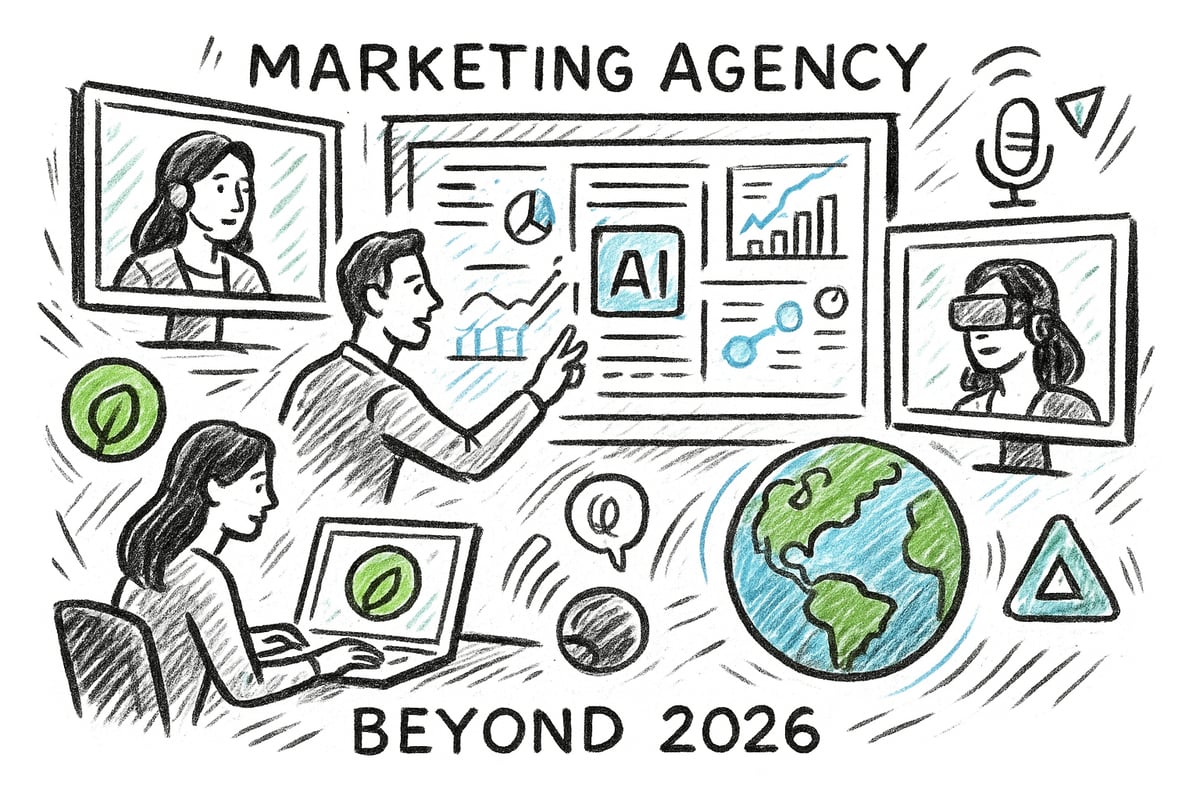
The future of marketing agency strategy will be shaped by powerful trends influencing how agencies operate, connect, and deliver value. Staying ahead means embracing innovation, adapting quickly, and making strategic decisions that set agencies apart from the competition.
Hyper-Personalization and Predictive Marketing
AI is powering a new era of hyper-personalization in marketing agency strategy. Agencies leverage data to predict client behavior, deliver tailored content, and optimize campaigns in real time. According to omnichannel marketing strategies, integrated approaches across channels fuel even more precise targeting. Predictive analytics will become essential for campaign success and client retention.
Voice, Visual, and Conversational Marketing
As voice search and smart assistants gain traction, agencies are incorporating voice-optimized content and conversational marketing into their service mix. Visual storytelling, including AR and VR, helps brands engage audiences in immersive ways. Agencies offering these innovative experiences will lead the pack as marketing agency strategy evolves to meet new consumer expectations.
Sustainability and Ethical Marketing
Clients increasingly demand that marketing agency strategy aligns with ethical standards and sustainability values. Agencies are developing eco-friendly campaigns, promoting social responsibility, and ensuring transparency in messaging. This trend not only attracts conscious clients but also builds long-term brand trust and loyalty in a rapidly changing market.
Globalization and Remote Collaboration
Remote work and cross-border partnerships are now integral to marketing agency strategy. Agencies are expanding globally, tapping into diverse talent pools, and delivering services virtually. This flexibility enables agencies to scale faster, enter new markets, and adapt to client needs regardless of location, making global collaboration a competitive advantage.
Continuous Learning and Innovation
The most successful marketing agency strategy will prioritize continuous learning and innovation. Agencies invest in upskilling, attend industry events, and foster a culture of experimentation. By staying current with technology and trends, agencies position themselves as thought leaders, attract top talent, and secure ongoing client growth in an ever-evolving landscape.
Ready to put these proven strategies into action and see real growth in your agency? You don’t have to navigate the evolving world of AI, automation, and value-driven marketing alone. If you want a personalized roadmap for standing out in 2026—from building predictable revenue to leveraging the latest tools—let’s chat. I’ve seen firsthand how agencies transform results by focusing on transparent partnerships and the right tech stack. Let’s explore how you can do the same. Take the next step and Book a FREE Strategy Call to unlock your agency’s full potential.