
In 2025, B2B sales cycles are growing more intricate, driving an urgent need for advanced lead tracking solutions that keep pace with evolving buyer behaviors. While Leadfeeder has been a go-to choice for many, businesses now seek leadfeeder alternatives that deliver deeper insights, greater flexibility, and richer data. The right lead tracking platform can uncover hidden sales opportunities, streamline workflows, and significantly boost ROI. In this article, we’ll compare eight top leadfeeder alternatives, breaking down their pricing, features, and unique benefits so you can confidently choose the smartest solution for your business in 2025.
Why Consider Leadfeeder Alternatives in 2025?
The B2B lead tracking landscape is undergoing a seismic shift in 2025. New privacy regulations are rewriting the rules, while AI-powered analytics are raising the bar for actionable insights. Buyers are savvier than ever, and their digital journeys are more complex. These trends are pushing businesses to re-evaluate their current tools and search for better leadfeeder alternatives.
While Leadfeeder has long been recognized for its company-level visitor identification and seamless CRM integrations, it now faces growing scrutiny. Many users point out the lack of person-level data, which can make it difficult for sales teams to pinpoint actual decision-makers. Rising subscription costs are also a concern, with entry pricing starting at $215 or more per month for just a handful of seats. This pricing shift is prompting businesses to seek cost-effective leadfeeder alternatives that offer more value for their investment.
Beyond cost, the demand for real-time, actionable insights is surging. Modern B2B sales teams need data enrichment that goes deeper than just knowing which company visited their website. They want to know who visited, their intent, and how best to engage. In fact, businesses leveraging advanced lead tracking tools can accelerate response times and boost conversion rates by quickly prioritizing high-intent leads. According to recent industry data, companies that adopt smarter leadfeeder alternatives often see faster sales cycles and increased ROI.
Let’s consider a typical scenario: A sales team using a legacy tool might receive a daily report showing that "ABC Corp" visited their site. With a modern leadfeeder alternative, that same team could receive an instant Slack alert identifying the actual decision-maker, their LinkedIn profile, and their engagement history. This granular information empowers reps to personalize outreach and close deals faster. For a deeper dive into how the right lead tracking solution can directly impact revenue, check out How SaaS lead tracking boosts revenue.
Today’s businesses expect more from their lead tracking platforms. Essential features now include person-level identification, intent signals, robust integrations with sales and marketing stacks, granular analytics, and flexible pricing models. Privacy compliance is also non-negotiable, with GDPR, CCPA, and other regulations shaping how platforms handle data. The table below summarizes what modern buyers demand versus what many legacy tools provide:
| Feature | Modern Expectation | Legacy Tools (e.g., Leadfeeder) |
|---|---|---|
| Person-level Identification | Yes | Limited |
| Real-time Alerts | Yes | Partial |
| Deep Data Enrichment | Yes | No |
| Flexible Pricing | Yes | Limited |
| Advanced Integrations | Yes | Basic |
| Privacy Compliance | Essential | Varies |
User reviews and industry feedback echo these trends. Many businesses are vocal about their need for leadfeeder alternatives that offer more accuracy, deeper insights, and better ROI. As sales cycles become more intricate, the right platform can be the difference between missed opportunities and consistent revenue growth.
In summary, the landscape in 2025 demands smarter, more adaptive solutions. By evaluating leadfeeder alternatives that align with your business goals, you’ll position your team to uncover hidden opportunities and drive measurable results.
8 Best Leadfeeder Alternatives for Smarter Lead Tracking
Are you searching for the most effective leadfeeder alternatives to supercharge your sales and marketing in 2025? The landscape for lead tracking is rapidly evolving. Businesses demand smarter solutions that go beyond basic company identification, offering richer data, real-time insights, and seamless integrations.
To help you navigate this crowded field, we’ve curated an unbiased list of the eight best leadfeeder alternatives. Each tool is evaluated by data accuracy, depth of insights, integration options, automation capabilities, pricing, and user experience. Our list is uniquely ordered to showcase strengths for different business needs, not based on competitor rankings.
If you want to broaden your research, check out this comprehensive guide on Top Lead Tracking Tools to Boost Your Sales Strategy in 2025 for additional context on choosing the right solution.
Before we dive in, here’s a comparison table to help you quickly scan the core features and pricing of each leadfeeder alternative:
| Tool | Best For | Starting Price | Person-Level Data | Real-Time Alerts | CRM Integration | Free Plan |
|---|---|---|---|---|---|---|
| RB2B | US B2B Sales/Agencies | Free/$149/mo | Yes (US) | Yes | Yes | Yes |
| Factors.ai | ABM, Deep Analytics | Custom | No | Yes | Yes | Free Trial |
| Visitor Queue | SMBs, Agencies | $39/mo | Yes | Yes | Yes | Free Trial |
| Lead Forensics | Mid-Large Sales Teams | Custom | No | Yes | Yes | Free Trial |
| Albacross | B2B Marketers, ABM | €99/mo | No | Yes | Yes | No |
| Lemlist | Outbound Sales/Agencies | Free/$32/mo | Yes | Yes | Yes | Yes |
| Bardeen | Automation/Growth Teams | Free | Yes (via scraping) | Yes | Yes | Yes |
| Clearbit | SaaS, Growth Teams | $45/mo | Yes | Yes | Yes | No |
Now, let’s explore each of these leadfeeder alternatives in detail so you can find your perfect fit.
RB2B
RB2B stands out among leadfeeder alternatives by offering person-level visitor identification, especially for US-based B2B sales teams. With a free plan that includes 150 monthly credits and a Pro+ option at $149 per month, RB2B is accessible for both small and growing teams.
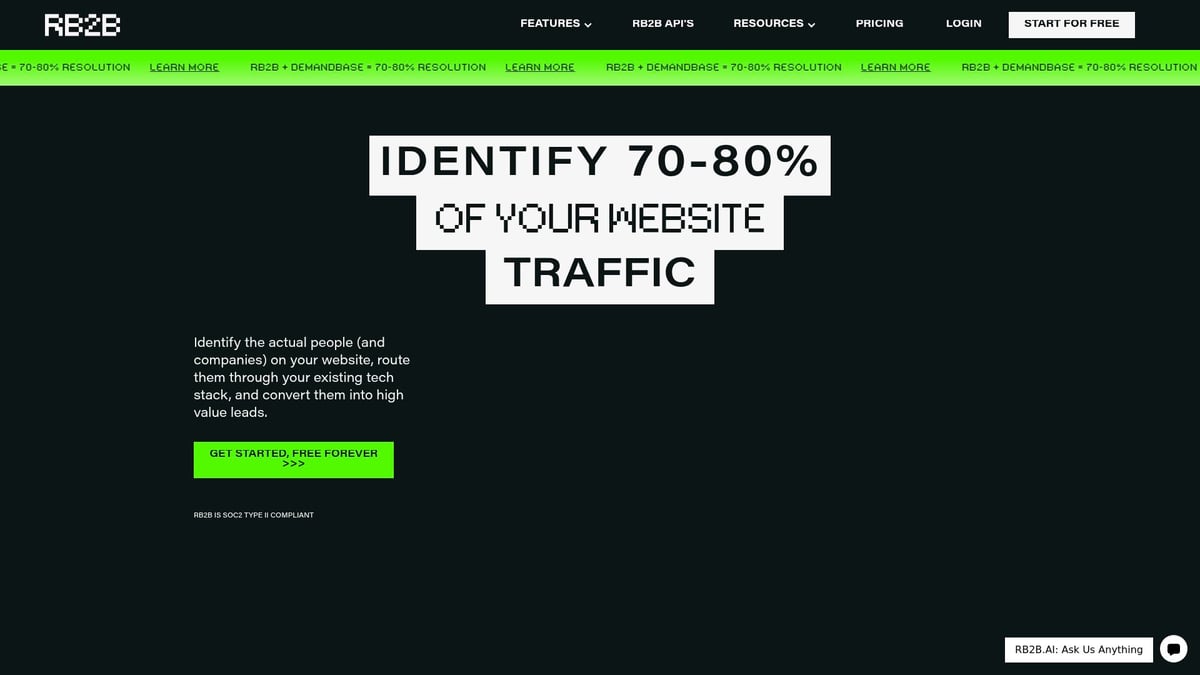
Key features include hot lead tagging, Slack alerts, CRM sync, and high US data accuracy. For global tracking, RB2B leverages Demandbase for company-level identification.
Core benefits:
- Real-time actionable insights help sales reps respond instantly.
- Advanced lead scoring prioritizes high-intent prospects.
- Fast setup and privacy compliance ensure a smooth experience.
Ideal for: US-focused B2B sales teams, agencies, and businesses needing granular lead data.
Pros:
- Person-level data for US visitors
- Real-time notifications and alerts
- Free tier for testing
- CRM integrations
Cons:
- Person-level identification limited to US
- Global coverage relies on Demandbase
Example: Sales teams using RB2B report a significant reduction in prospecting time. By targeting known decision-makers, they increase conversion rates and close deals faster.
RB2B is a top choice for businesses seeking leadfeeder alternatives that deliver detailed, actionable data for US prospects. Its integration capabilities and real-time insights make it a compelling solution for sales-driven organizations.
Factors.ai
Factors.ai is a robust addition to the leadfeeder alternatives lineup, prioritizing deep analytics and attribution. With custom pricing and a free trial, it caters to enterprises and demand generation teams needing comprehensive engagement metrics.
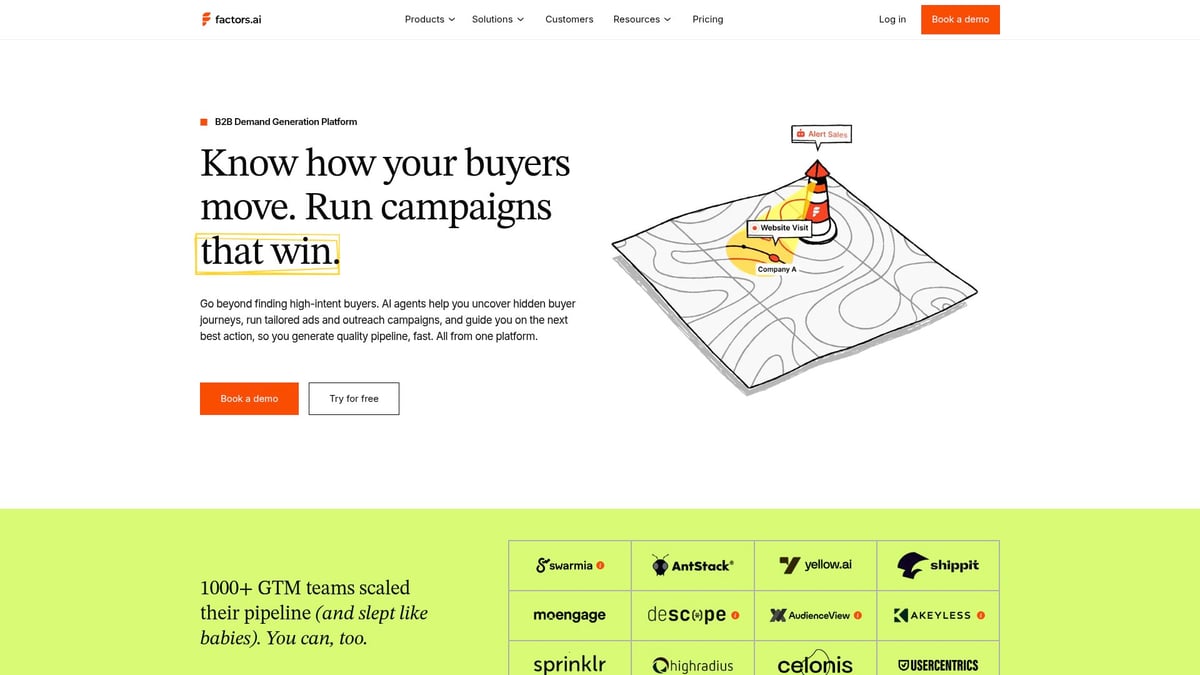
Core features include:
- Account identification with up to 64% match rate (powered by 6sense)
- Firmographics, real-time Slack alerts, ABM analytics
- Multi-touch attribution and advanced reporting
Key benefits:
- Unified analytics and attribution
- Granular metrics like scroll-depth and time on page
- Custom scoring and deep reporting
Ideal for: B2B marketers, demand gen teams, and enterprises focused on ABM campaigns.
Pros:
- High data accuracy
- Detailed analytics and engagement tracking
- Custom scoring models
- Integrations with CRMs and marketing tools
Cons:
- Complexity may overwhelm smaller teams
- Pricing is available on request
Example: Factors.ai users identify 27% more accounts compared to other tools, optimizing their ABM campaigns and increasing pipeline velocity.
If your business needs leadfeeder alternatives that combine analytics, attribution, and real-time identification, Factors.ai delivers the depth and sophistication required for data-driven marketing.
Visitor Queue
Visitor Queue is one of the most affordable leadfeeder alternatives, starting at just $39 per month for 100 unique companies. It’s designed for SMBs and agencies that want scalable lead tracking without breaking the bank.
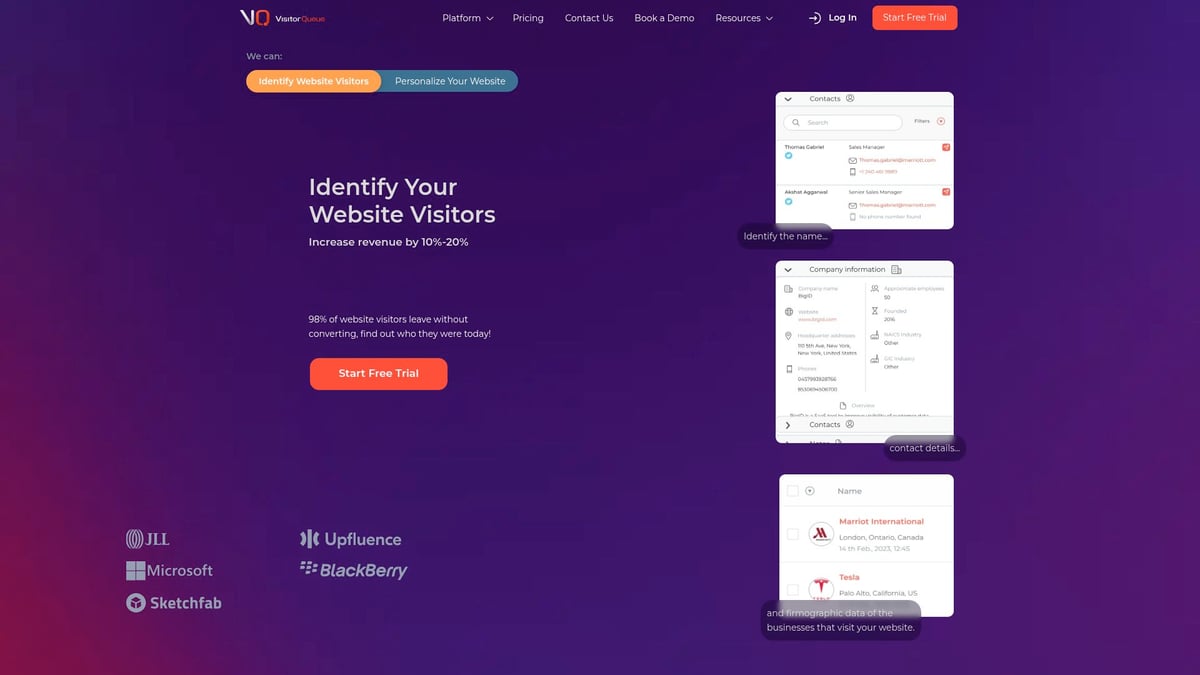
Core features:
- Company-level visitor identification
- Decision-maker contact info
- Real-time notifications
- API and CRM integration
- Website personalization add-on
Key benefits:
- Fast access to decision-makers
- Customizable notifications
- Flexible integration options
Ideal for: SMBs, agencies, and teams seeking cost-effective, scalable solutions.
Pros:
- Detailed contact information
- API access for custom workflows
- Multiple plan options
- Free trial available
Cons:
- Navigation can be confusing
- Occasional data gaps
Example: Agencies use Visitor Queue to quickly prioritize outreach, leveraging direct contact details to increase conversion rates.
For businesses seeking leadfeeder alternatives with strong contact data and flexible pricing, Visitor Queue is a smart, budget-friendly option.
Lead Forensics
Lead Forensics is a powerhouse among leadfeeder alternatives for mid-sized to large sales teams. With custom pricing and free trials, it delivers instant alerts, CRM integration, and detailed analytics.
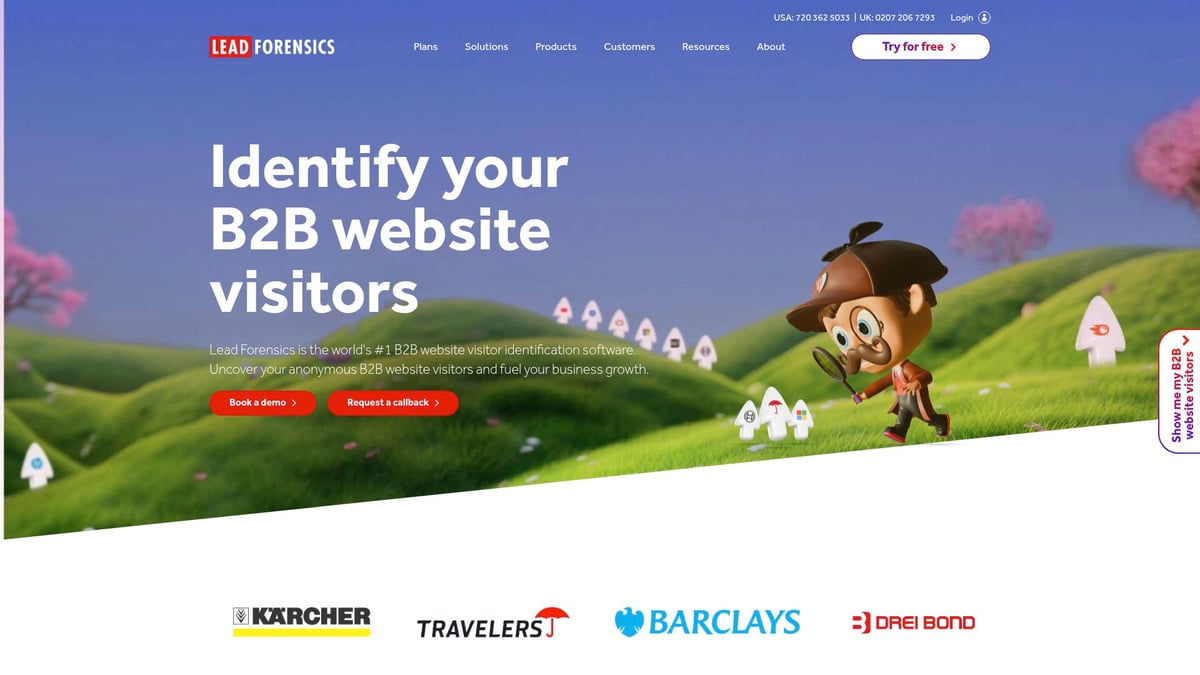
Core features:
- Company-level visitor identification
- Instant alerts on high-value visitors
- CRM integration for seamless workflows
- In-depth analytics and reporting
Key benefits:
- Actionable insights for anonymous web visitors
- Strong customer support
- Easy-to-use dashboard
Ideal for: Sales teams at mid-sized and large organizations who need robust lead generation.
Pros:
- Intuitive interface
- Deep visitor insights
- Dedicated support
Cons:
- Higher cost for small teams
- Some data inaccuracies reported
- Limited integration options
Example: Businesses use Lead Forensics to fast-track hot leads into their sales pipelines, improving response times and closing rates.
If your organization needs leadfeeder alternatives capable of scaling with your team, Lead Forensics offers the depth and support required for enterprise growth.
Albacross
Albacross brings advanced intent data and ABM features to the world of leadfeeder alternatives. Starting at €99 per month, it’s built for B2B marketers focused on intent-driven campaigns and account-based marketing.
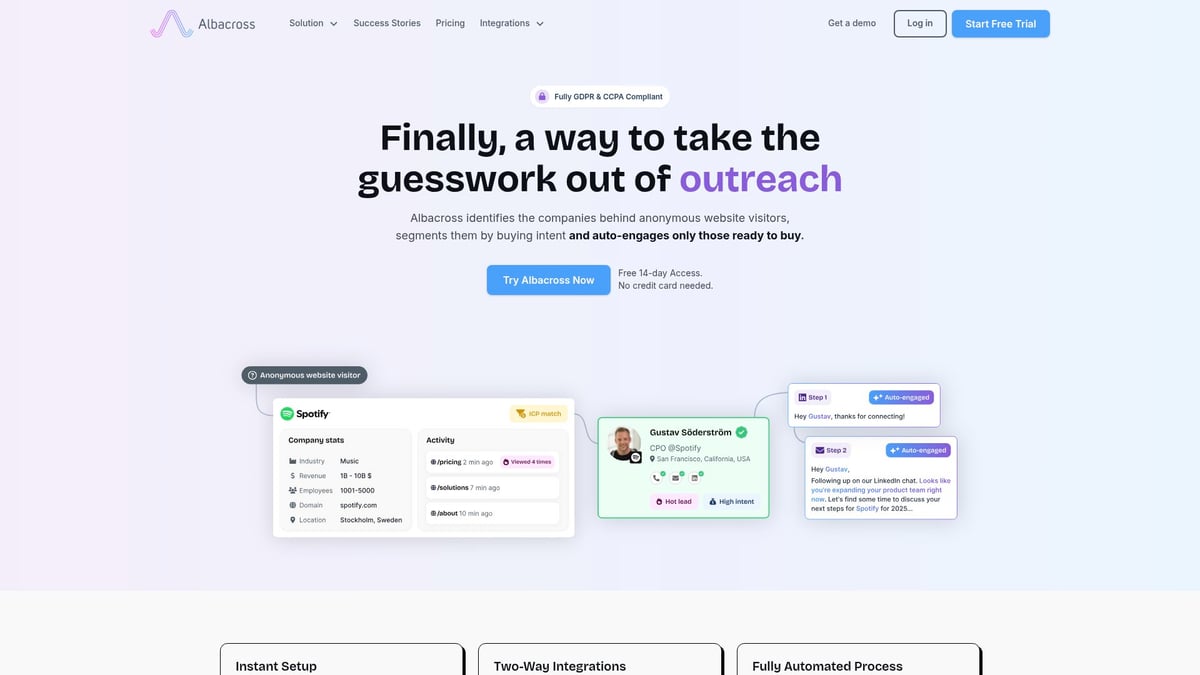
Core features:
- B2B intent data and company tracking
- Firmographics and real-time alerts
- ABM ad targeting and CRM integration
Key benefits:
- First-party intent data for precise targeting
- Robust ABM capabilities
- Real-time notifications for sales and marketing teams
Ideal for: B2B marketers and account-based marketing teams.
Pros:
- Advanced intent signals
- CRM and ad platform integrations
- Targeted ad campaigns
Cons:
- Higher starting price
- Learning curve during setup
Example: Marketing teams use Albacross to trigger ads to high-intent accounts, increasing engagement and accelerating deal cycles.
Albacross is a preferred choice for those seeking leadfeeder alternatives with ABM and intent-driven features that support both sales and marketing objectives.
Lemlist
Lemlist is a unique player among leadfeeder alternatives, blending lead tracking with multi-channel outreach. With a free plan and paid options from $32 to $129 per month, Lemlist empowers sales teams to personalize outreach at scale.
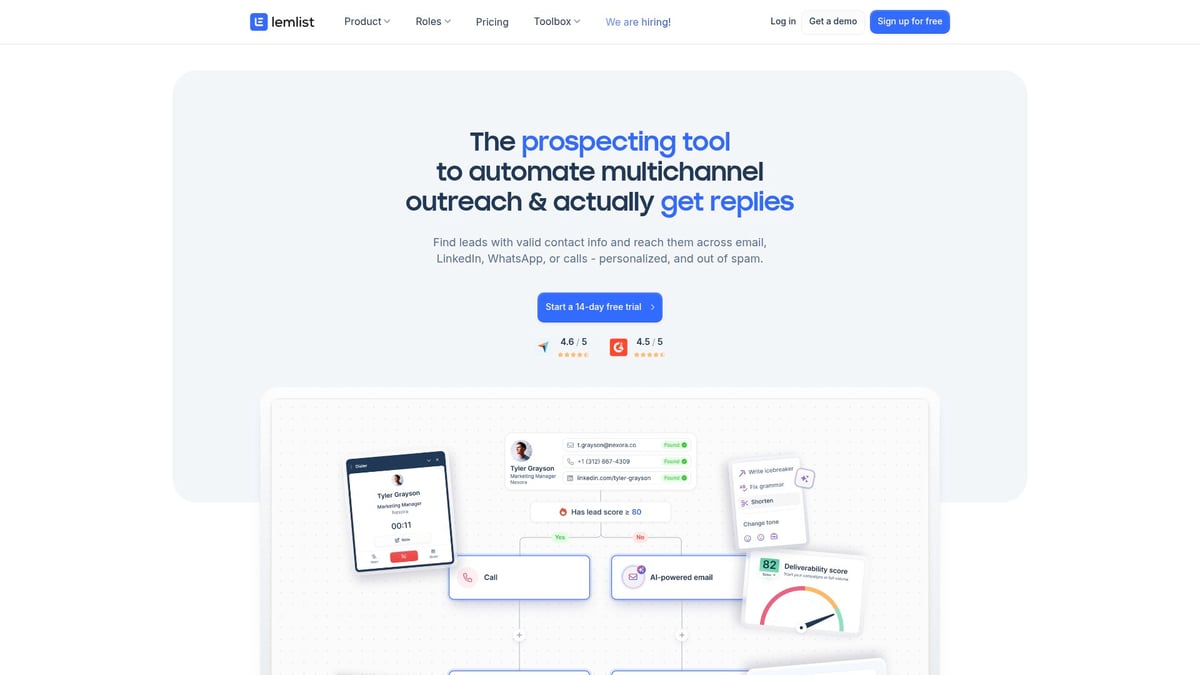
Core features:
- Multi-channel outreach (email, LinkedIn, phone)
- AI-powered personalization
- Email warm-up and deliverability tools
- CRM integration and automation
Key benefits:
- Personalize outreach for higher engagement
- Automate follow-ups, saving time
- Improve email deliverability
Ideal for: Sales teams and agencies running outbound campaigns.
Pros:
- Powerful personalization tools
- Multi-channel outreach support
- Free tier for getting started
Cons:
- Steep learning curve for new users
- User interface can be clunky
Example: Lemlist users automate their follow-up process, boosting reply rates and increasing meetings booked.
For organizations seeking leadfeeder alternatives that combine tracking with outreach automation, Lemlist is an excellent fit.
Bardeen
Bardeen is a standout among leadfeeder alternatives for teams focused on automation and workflow efficiency. With a generous free plan and paid options for advanced automations, Bardeen leverages AI to streamline repetitive lead generation tasks.
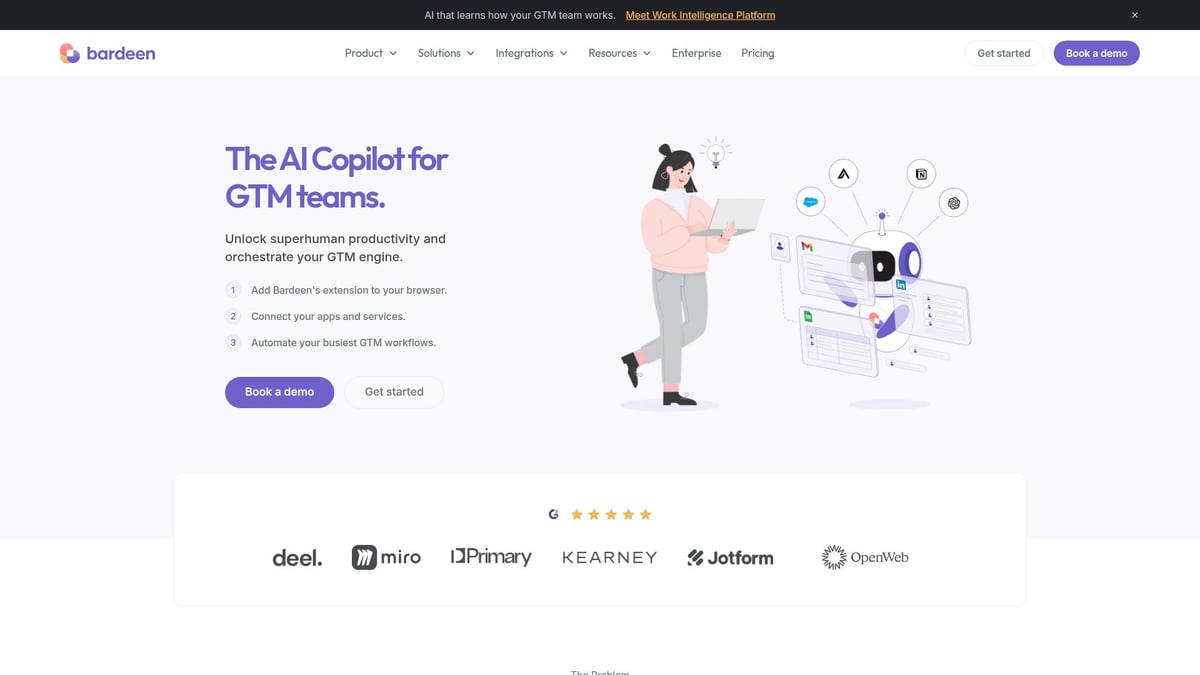
Core features:
- Workflow automation across platforms
- LinkedIn scraping for lead identification
- AI-powered lead enrichment
- No-code builder for custom workflows
Key benefits:
- Automates multi-platform lead generation
- Continuous cloud workflows keep data fresh
- Flexible integrations for tech-savvy teams
Ideal for: Growth hackers, sales teams, marketers seeking to automate manual tasks.
Pros:
- Multi-platform workflow automation
- AI-driven data enrichment
- Integrates with various tools
Cons:
- Advanced features require technical know-how
- Best suited for teams comfortable with automation
Example: SDRs use Bardeen to automate LinkedIn prospecting and CRM updates, freeing up valuable time for high-impact activities.
If automation is a top priority, Bardeen is one of the most flexible leadfeeder alternatives available in 2025.
Clearbit (Breeze Intelligence)
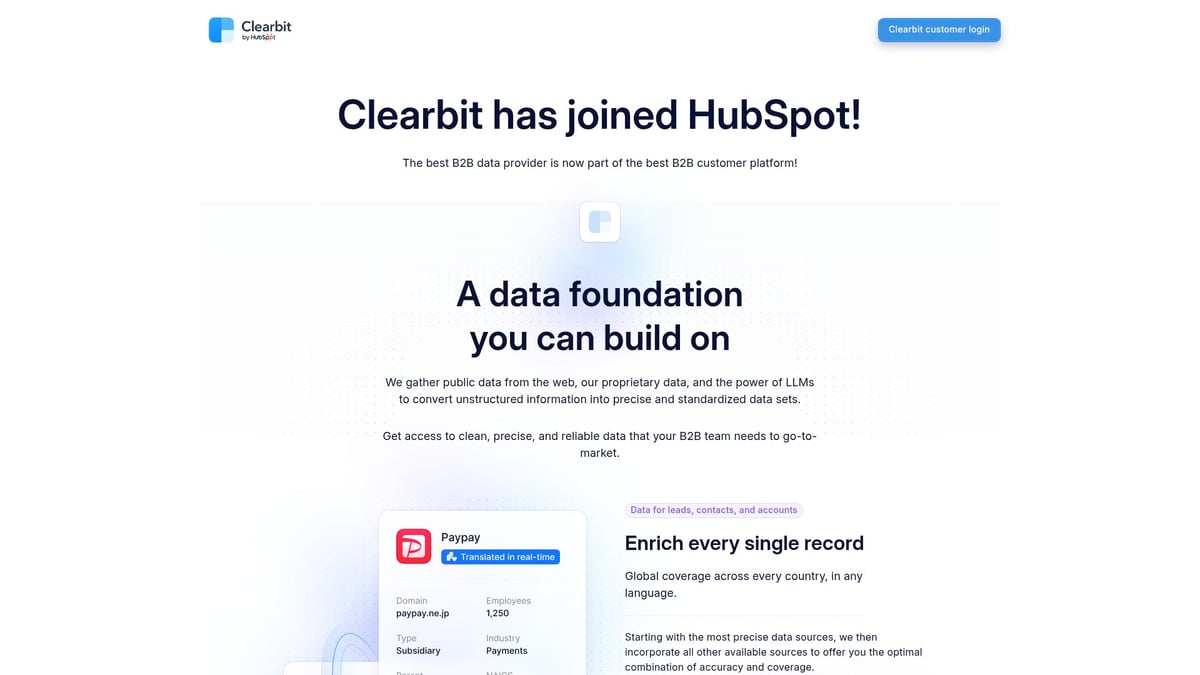
Clearbit rounds out our list of leadfeeder alternatives with powerful data enrichment and real-time lead intelligence. Starting at just $45 per month, Clearbit is accessible for SaaS companies and growth teams.
Core features:
- Person and company-level identification
- Real-time lead intelligence and updates
- Deep data enrichment for sales and marketing
- Seamless integration with CRMs and marketing platforms
Key benefits:
- Accurate, up-to-date lead enrichment
- Actionable insights for faster sales qualification
- Affordable entry plan with scalable options
Ideal for: SaaS companies, B2B marketers, and teams needing enriched lead data.
Pros:
- Reliable enrichment data
- Strong integration ecosystem
- Budget-friendly for startups
Cons:
- Some advanced features require higher-tier plans
- Data coverage varies by region
Example: SaaS sales teams use Clearbit to instantly enrich inbound leads, enabling faster and more precise qualification.
For those wanting leadfeeder alternatives that excel in data enrichment and real-time intelligence, Clearbit is a versatile, scalable choice.
Key Features to Look for in a Lead Tracking Solution
Choosing the right lead tracking platform is essential for businesses evaluating leadfeeder alternatives. As sales cycles get longer and buyer journeys more complex, modern tools must offer more than basic visitor identification. The right features can mean the difference between a missed opportunity and a closed deal.
Person-Level vs. Company-Level Identification
Granularity is key in the search for leadfeeder alternatives. Person-level identification provides contact names, roles, and sometimes even LinkedIn or email data. This enables sales teams to reach out directly to decision-makers, instead of guessing who visited. Company-level data is useful, but knowing who exactly is browsing your site can dramatically increase response rates.
Real-Time Alerts and Notifications
Speed matters in B2B sales. Platforms with real-time alerts let your team connect with prospects while they are still engaged. Immediate insights ensure that hot leads do not go cold, giving you a crucial edge over competitors. Whether through Slack, email, or CRM notifications, this feature helps shrink response times.
Data Accuracy and Enrichment
The best leadfeeder alternatives stand out by offering verified, up-to-date information. Data enrichment means supplementing basic visitor info with firmographics, intent signals, and behavioral data. This empowers your team to prioritize high-potential leads and personalize outreach.
| Feature | Why It Matters | Impact on Sales |
|---|---|---|
| Person-level ID | Direct access to key contacts | Higher conversion |
| Real-time alerts | Fast follow-up | Shorter sales cycle |
| Data enrichment | Deeper insights | Improved targeting |
Integration Capabilities
Seamless integration with your CRM, marketing automation, and communication tools is non-negotiable. You should be able to sync data instantly, trigger automated workflows, and maintain a single source of truth. The top Best Lead Management Software 2025 options all emphasize robust integrations as a must-have.
Custom Scoring and Segmentation
AI-driven lead scoring and behavioral segmentation allow you to focus on the prospects most likely to convert. By tracking engagement levels, intent signals, and firmographics, these features help your team prioritize and personalize outreach.
Privacy Compliance
With evolving regulations like GDPR and CCPA, privacy compliance is a critical factor when assessing leadfeeder alternatives. Ensure any solution you consider is transparent about data sources, consent, and security.
Scalability and Pricing Flexibility
Your lead tracking tool should grow with your business. Flexible pricing and customizable plans are essential, especially as team sizes and data needs change.
Example:
Imagine combining person-level data, real-time notifications, and deep CRM integration. Your sales team receives instant alerts when a high-intent prospect visits, views their enriched profile, and triggers a personalized outreach—all while staying compliant. This approach not only boosts conversion rates but also maximizes ROI.
How to Choose the Right Leadfeeder Alternative for Your Business
Selecting the best leadfeeder alternatives for your business can feel overwhelming, but breaking the process into clear steps makes it far easier. The right choice will empower your team to capture more qualified leads, streamline sales, and ultimately drive growth. Here’s a step-by-step guide to help you confidently evaluate and select the ideal platform.
Assess Your Workflow and Pain Points
Start by mapping out your current sales and marketing workflow. Where do leads fall through the cracks? Are you missing real-time alerts or struggling with limited data? Understanding these pain points will clarify what you need from leadfeeder alternatives. List your top priorities, such as faster lead response or deeper analytics, to ensure any new platform addresses your actual challenges.
Identify Must-Have Features
Modern businesses expect more than just basic company identification. Look for leadfeeder alternatives that offer customization, person-level data, seamless CRM integrations, and automation. Features like real-time notifications and granular segmentation can be game-changers. Explore actionable methods for finding and qualifying B2B leads to help match features with your goals.
- Custom fields and workflows
- Automated lead scoring
- Multi-channel integrations
These capabilities will set your team up for smarter, more efficient prospecting.
Compare Pricing and ROI
Evaluate the cost of each platform against the potential improvement in qualified leads and sales. Some leadfeeder alternatives may have a higher upfront price but offer superior value through advanced features or automation. For a detailed comparison, check out the Top 10 Lead Management Software Tools in 2025. Always consider flexible pricing or free tiers that let you scale as you grow.
| Solution | Starting Price | Free Trial | Notable Feature |
|---|---|---|---|
| RB2B | Free/$149/mo | Yes | Person-level data |
| Visitor Queue | $39/mo | Yes | Decision-maker info |
| Lead Forensics | Custom | Yes | Detailed analytics |
Consider Team Size and Expertise
Match the complexity of your chosen leadfeeder alternatives to your team’s technical skills. Smaller teams may benefit from intuitive platforms with minimal setup, while larger or more technical teams can leverage advanced automation and custom workflows. Assess how much internal support you have for onboarding and ongoing management before committing.
Evaluate Support and Test-Drive Options
Customer support, training resources, and onboarding assistance are crucial for a smooth transition. Read reviews and testimonials to gauge user satisfaction. Take advantage of free trials and demos offered by most leadfeeder alternatives. This hands-on testing ensures the platform fits your workflow and delivers the promised value before you invest fully.
Real-World Example: B2B SaaS Switch
Imagine a B2B SaaS company using leadfeeder alternatives to overcome stalled sales pipelines. By mapping their workflow, prioritizing person-level data, and leveraging real-time alerts, they reduced response times and increased conversions. They tested several platforms, compared features, and used free trials before making the switch. For more on advanced strategies, explore these B2B SaaS lead generation strategies.
Choosing the right leadfeeder alternatives is about aligning platform capabilities with your business objectives. Take a methodical approach, leverage free resources, and involve your team in the decision. This ensures your next lead tracking tool becomes a true growth engine.
Future Trends in Lead Tracking and Sales Intelligence
The world of lead tracking is entering a new era. For businesses evaluating leadfeeder alternatives, understanding future trends is critical to staying ahead of the competition. As the sales landscape transforms in 2025, companies must adapt to smarter, faster, and more compliant ways to capture and convert leads.
Artificial Intelligence and Machine Learning
AI and machine learning are redefining how lead tracking platforms operate. Predictive lead scoring, automated outreach, and deep behavioral analytics are now at the core of advanced leadfeeder alternatives. These technologies help sales teams prioritize the hottest prospects and automate repetitive tasks, giving them more time to focus on closing deals.
Modern platforms use AI to analyze buyer intent, website interactions, and engagement patterns. This leads to smarter segmentation and more accurate targeting. As a result, businesses see higher conversion rates and improved ROI.
Person-Level Identification and Privacy-First Tracking
One of the most significant shifts in 2025 is the move from company-level to person-level identification. Top leadfeeder alternatives now offer tools that pinpoint not just which company visited your site, but also who the actual decision-makers are. This granular insight allows for hyper-personalized outreach and more meaningful engagement.
With privacy regulations like GDPR and CCPA evolving, platforms are investing in privacy-first tracking. Compliance is no longer optional. Businesses must choose solutions that balance deep data enrichment with respect for user privacy, ensuring trust and minimizing legal risk.
Seamless Integrations and Unified GTM Stacks
Today’s sales and marketing teams demand tools that play well together. Future-ready leadfeeder alternatives offer robust integrations with CRMs, ABM platforms, ad networks, and sales engagement tools. This creates a unified go-to-market stack, streamlining lead management from identification through to conversion.
For a comprehensive look at how these integrations are shaping the industry, check out The 15 Best Lead Management Software and Tools in 2025. These trends are helping businesses maximize efficiency and gain a competitive edge.
Real-Time Intent Signals and Data-Driven Personalization
The ability to capture real-time intent signals across channels is changing the game. Modern platforms aggregate data from website visits, email engagement, social media, and more. This empowers sales teams to act instantly when a prospect shows buying intent, increasing their chances of success.
Data-driven personalization is now a must-have. By leveraging enriched lead profiles and behavioral data, businesses can tailor their outreach to each individual. This approach not only improves response rates but also builds stronger, trust-based relationships.
How Leading Companies Are Future-Proofing Their Sales Intelligence
Forward-thinking organizations are already adopting these trends. For example, a SaaS company using AI-powered leadfeeder alternatives can identify high-intent buyers, automate personalized outreach, and stay compliant with privacy laws. Their sales teams respond faster, conversions go up, and customer journeys become more seamless.
By embracing these innovations, your business can future-proof its lead tracking and sales intelligence strategy. Now is the time to explore leadfeeder alternatives that align with where the market is headed.
Now that you’ve explored the top Leadfeeder alternatives and what really matters in smarter lead tracking for 2025, you might be wondering where to start for your own business. If you want to cut through the noise and get a tailored action plan that actually drives results, why not chat with experts who live and breathe lead generation and AI-powered growth? I’ve seen firsthand how the right strategy can transform cold prospects into ready buyers—and Adstra’s approach is all about aligning with your goals and delivering real, measurable impact. Ready to see what’s possible? Book a FREE Strategy Call and let’s talk about your growth journey!